The L2 vertebra plays a crucial role in your lower back's stability and function as the second vertebra in the lumbar spine region. Understanding this important spinal component can help you better recognize potential issues and seek appropriate medical care when needed.
Located in the upper portion of your lower back, the L2 vertebra helps support your body weight while protecting vital nerve roots that control movement and sensation in your legs and lower body. This comprehensive guide explores the L2 vertebra's importance, common injuries, and treatment approaches.
Anatomy and Function of the L2 Vertebra
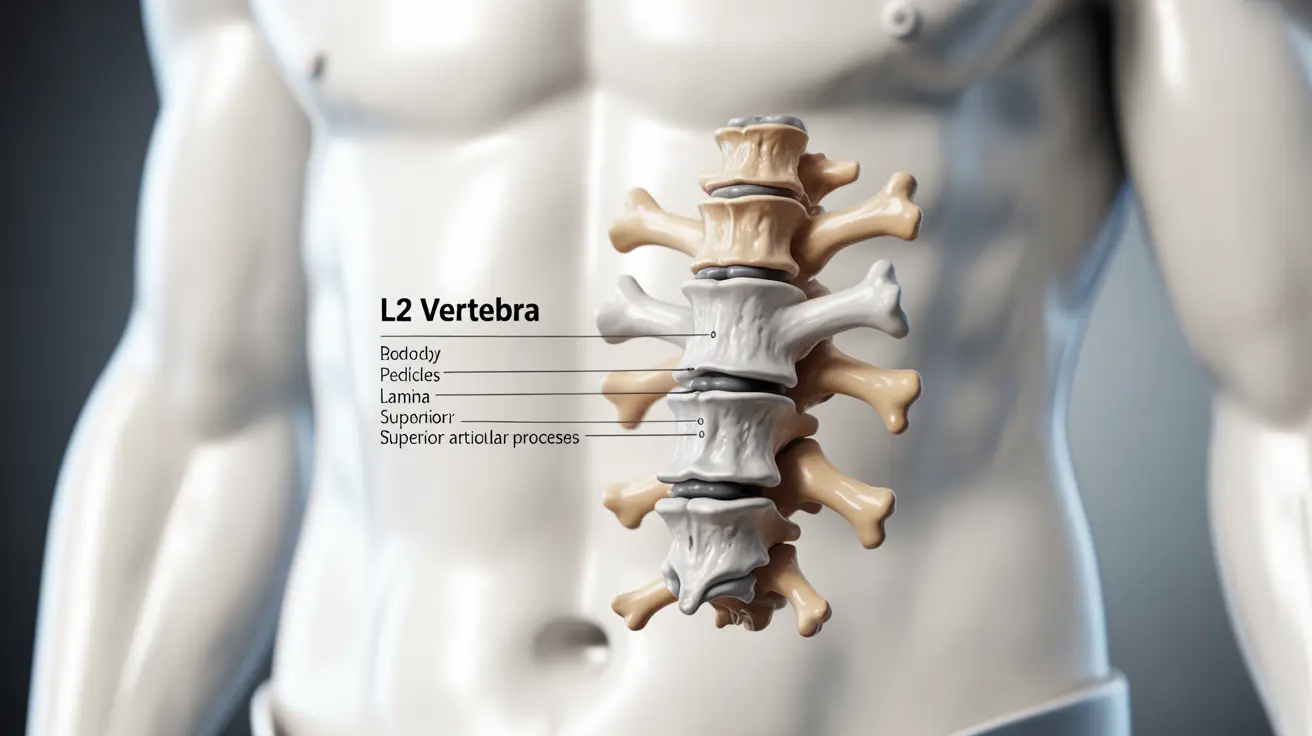
The L2 vertebra features a robust, cylindrical vertebral body designed to bear significant weight loads. Its structure includes several key components that work together to provide stability and protection:
- Vertebral body: The main weight-bearing portion
- Spinous process: The bony projection you can feel through your skin
- Transverse processes: Side projections where muscles attach
- Vertebral canal: Houses and protects the spinal cord
- Facet joints: Allow controlled movement between vertebrae
This vertebra works in conjunction with surrounding muscles, ligaments, and nerve roots to enable proper spine function and movement.
Common L2 Vertebra Injuries and Conditions
Several conditions can affect the L2 vertebra, ranging from acute injuries to degenerative conditions:
- Compression fractures
- Herniated discs
- Spinal stenosis
- Nerve root compression
- Degenerative disc disease
Understanding these conditions helps in recognizing symptoms early and seeking appropriate medical attention.
Signs and Symptoms of L2 Vertebra Problems
When the L2 vertebra is injured or affected by disease, several distinctive symptoms may appear:
- Lower back pain
- Radiating leg pain
- Muscle weakness in the thighs
- Numbness or tingling in the legs
- Difficulty walking or standing
- Changes in bladder or bowel function (in severe cases)
Diagnosis and Medical Assessment
Healthcare providers use various diagnostic tools to evaluate L2 vertebra injuries:
- Physical examination
- X-rays
- MRI scans
- CT scans
- Neurological testing
- EMG studies when nerve involvement is suspected
Treatment Approaches and Recovery
Treatment for L2 vertebra conditions varies depending on the specific injury or condition:
Conservative Treatment Options
- Physical therapy
- Pain management medications
- Activity modification
- Bracing (when necessary)
- Exercise programs
Surgical Interventions
Surgery may be recommended for severe cases involving:
- Unstable fractures
- Severe nerve compression
- Progressive neurological deficits
- Failed conservative treatment
Prevention and Long-term Care
Maintaining L2 vertebra health involves several preventive measures:
- Regular exercise focusing on core strength
- Proper posture maintenance
- Safe lifting techniques
- Weight management
- Regular physical activity
Frequently Asked Questions
What are the common symptoms of an injury to the L2 vertebra?
Common symptoms include lower back pain, leg pain or weakness, numbness in the thighs, and difficulty with certain movements. Severe injuries may also cause changes in bladder or bowel function.
How is an L2 vertebra injury diagnosed and treated?
Diagnosis typically involves physical examination, imaging studies (X-rays, MRI, CT scans), and neurological testing. Treatment ranges from conservative approaches like physical therapy and medication to surgery in severe cases.
What functions and movements are affected by damage to the L2 vertebra?
Damage to the L2 vertebra can affect hip flexion, knee extension, and thigh movement. It may also impact lower body sensation and, in severe cases, bladder and bowel control.
How does the L2 vertebra support the body and protect the spinal cord?
The L2 vertebra provides structural support for the lower back, helps distribute body weight, and contains a canal that protects the spinal cord and nerve roots. It also serves as an attachment point for important back muscles and ligaments.
What are the risks and recovery options after an L2 vertebra fracture or spinal cord injury?
Risks include chronic pain, neurological deficits, and potential mobility issues. Recovery options depend on injury severity and may include physical therapy, medication, bracing, or surgery. Recovery time varies from weeks to months, with some patients requiring long-term rehabilitation.