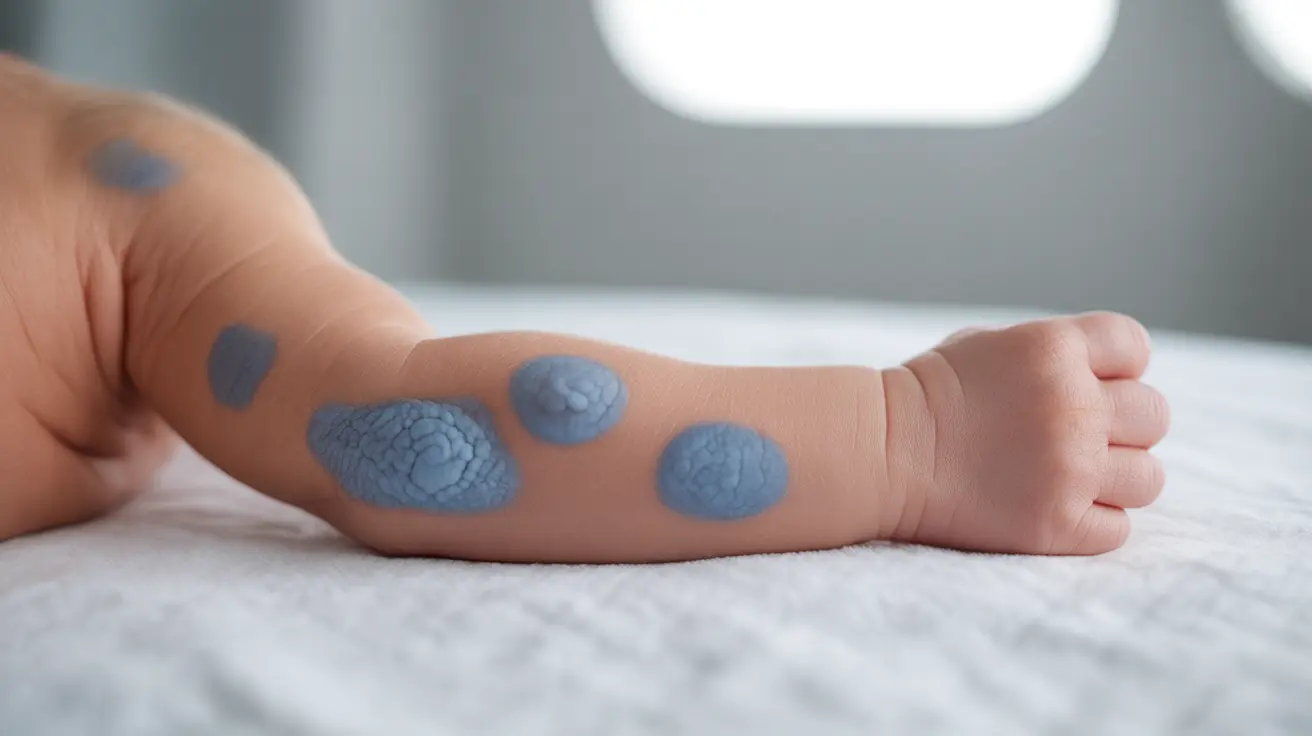
Mongolian blue spots, also known as congenital dermal melanocytosis, are natural birthmarks that appear as flat, bluish-gray patches on a newborn's skin. These distinctive marks are completely harmless and occur commonly in babies of Asian, African, Hispanic, and Native American descent. Understanding these birthmarks can help parents differentiate them from other skin conditions and know what to expect as their child grows.
While these marks might initially cause concern for new parents, it's important to know that they are a normal variation in skin pigmentation and not associated with any medical conditions. This comprehensive guide will explore everything you need to know about Mongolian blue spots, from their appearance to their natural progression over time.
Physical Characteristics and Location
Mongolian blue spots typically have several distinct features that make them recognizable:
- Flat, smooth surface with no raised areas
- Blue-gray or blue-green coloration
- Irregular shapes with undefined borders
- Most commonly found on the lower back and buttocks
- Can also appear on shoulders, arms, and legs
The size of these birthmarks can vary significantly, ranging from small spots to larger patches covering substantial areas of the body. Their appearance is often similar to bruises, which can sometimes lead to confusion for parents and caregivers.
Understanding the Cause
These distinctive birthmarks occur due to trapped melanocytes (pigment-producing cells) that didn't properly migrate during fetal development. This natural process results in the characteristic blue-gray coloration visible through the skin's surface. The depth of these melanocytes in the skin's layers creates the bluish appearance, similar to how veins appear blue through the skin.
Cultural and Historical Context
Despite their common name, Mongolian blue spots are not specific to any single ethnic group. The term originated from historical medical literature but doesn't accurately reflect their widespread occurrence across various populations. Modern medical professionals often prefer the term "congenital dermal melanocytosis" to avoid geographical or ethnic associations.
Natural Progression and Fading
Most Mongolian blue spots follow a predictable pattern of development:
- Present at birth or appear shortly after
- Most prominent during early infancy
- Generally begin fading during early childhood
- Usually disappear completely by school age
- Some may persist into adolescence or adulthood
Medical Significance
These birthmarks require no medical treatment and pose no health risks. However, it's important to have them documented in a child's medical records to prevent confusion with bruising or other skin conditions. This documentation can be particularly important in childcare or medical settings where unfamiliar caregivers might mistake them for signs of injury.
Frequently Asked Questions
What are the typical symptoms and appearance of Mongolian blue spots in newborns?
Mongolian blue spots appear as flat, blue-gray patches on a newborn's skin, most commonly on the lower back and buttocks. They have no texture, don't cause any pain or discomfort, and are present at birth or appear shortly after.
How do Mongolian blue spots differ from bruises, and why is this distinction important?
Unlike bruises, Mongolian blue spots don't change color over time, aren't tender to touch, and have consistent coloration throughout. This distinction is important to prevent misidentification as signs of abuse or injury, particularly in childcare settings.
What are the common causes of Mongolian blue spots, and are they hereditary?
These spots are caused by melanocytes trapped deep in the skin during fetal development. They have a genetic component and are more common in certain ethnic backgrounds, suggesting hereditary factors play a role in their occurrence.
How do Mongolian blue spots typically fade, and do they ever persist into adulthood?
Most Mongolian blue spots naturally fade during early childhood and disappear by age 4-5. However, some spots may persist into adolescence or adulthood, particularly larger or darker marks.
What are the best ways to manage or remove Mongolian blue spots if they persist beyond childhood?
Since these spots are harmless, treatment isn't medically necessary. For persistent spots that cause cosmetic concerns in older children or adults, laser therapy may be an option, though this should be discussed with a dermatologist to determine appropriateness and effectiveness.