By Tomasz Sadowski · Medical & Health Content Reviewer Last updated: June 2026 · Reading time: ~11 minutes
TL;DR — The Quick Summary
A forgotten tampon can't get truly lost — it stays in the vagina (a closed space), and most can be removed at home by relaxing, bearing down, and gently sweeping with clean fingers.
Don't use tweezers or tools, and don't keep "digging" — this can cause injury or push it higher; if you can't reach it, see a clinician.
Watch for warning signs of infection or toxic shock syndrome (TSS): fever, vomiting/diarrhea, a sunburn-like rash, dizziness, or fainting — these need urgent medical care.
Prevention is simple: change tampons every 4–8 hours, use the lowest needed absorbency, and remove the last one when your period ends.
Table of Contents
- Found a Forgotten Tampon? Don't Panic
- How to Safely Remove a Forgotten Tampon at Home
- What NOT to Do
- Why a Retained Tampon Can Cause Problems
- Toxic Shock Syndrome: The Rare but Serious Risk
- Warning Signs: When to See a Doctor
- What to Expect at the Doctor or Clinic
- Prevention: Simple Habits That Lower Your Risk
- Frequently Asked Questions
- References
Found a Forgotten Tampon? Don't Panic
First, take a breath. Realizing you've left a tampon in — maybe for a day, maybe longer — is more common than you'd think, and it is not a sign that you've done something foolish. Clinicians see retained tampons regularly, and the situation is usually very manageable.
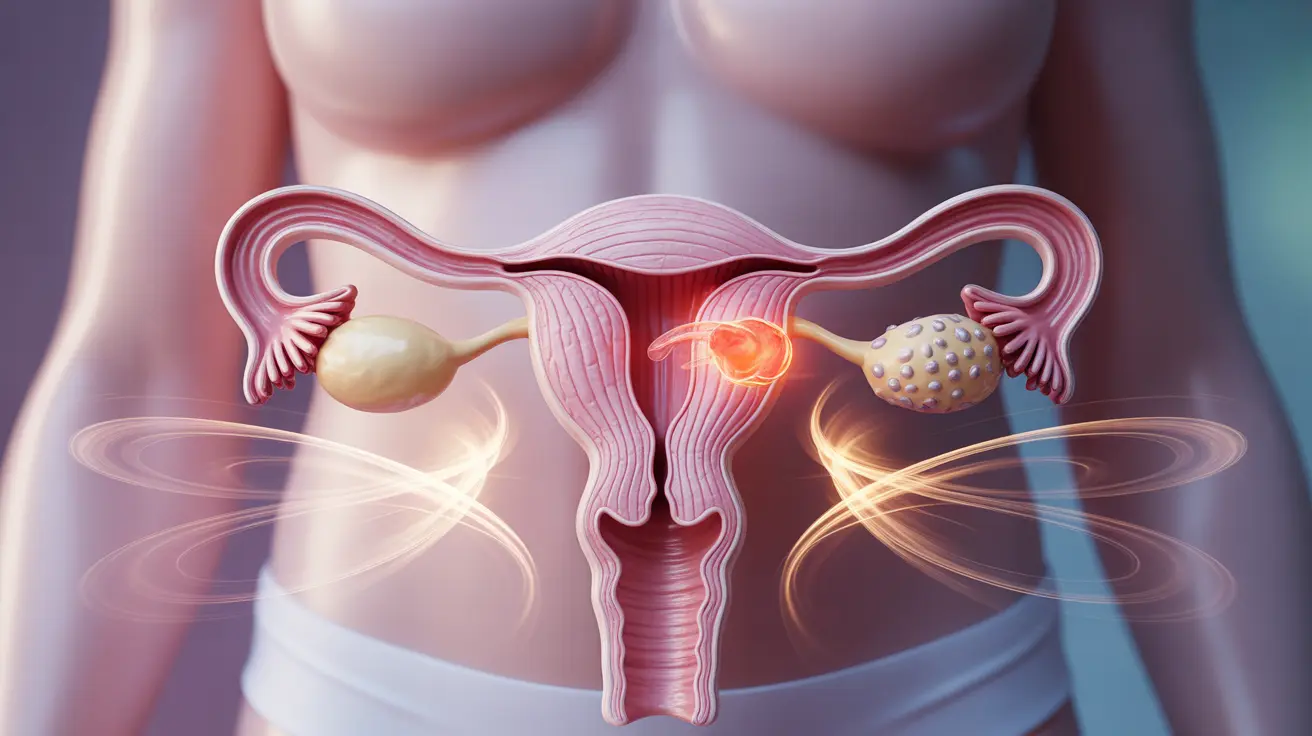
Here's the most reassuring fact: a tampon cannot get "lost" inside you. The vagina is a closed pouch, and the cervix at the top is far too small for a tampon to pass through. So wherever it is, it's still in the vagina — within reach in the vast majority of cases.
Sometimes there are no symptoms at first. Other times, the first clue is a foul-smelling discharge, irritation, or light spotting. Either way, the goal is simple: remove it calmly and safely, then watch for any warning signs.
This guide walks you through exactly how — and, just as importantly, when to let a professional take over.
How to Safely Remove a Forgotten Tampon at Home
If you feel well and simply need to retrieve it, this stepwise approach reflects standard first-line advice. Move slowly and gently.
- Wash your hands thoroughly with soap and water, and make sure your fingernails are clean and not sharp.
- Relax your body. Anxiety tightens the pelvic floor muscles, which makes removal harder. Take a few slow breaths first.
- Get into a helpful position. Sit on the toilet, squat, or place one foot up on the bathtub or toilet seat to open up the angle.
- Bear down gently — as if having a bowel movement. This naturally lowers the tampon and may bring the string within reach.
- Insert clean fingers and sweep gently. Move your fingers in a slow, circular motion to feel for the string or the tampon itself.
- Hook and ease it out. Once you feel it, hook a finger around it and pull gently downward and slightly toward your back.
- Finish up. Wash your hands again, and take note of any unusual odor or discharge. If you think a piece may remain, or you feel unwell, contact a clinician.
Key takeaway: Patience and relaxation do most of the work. A calm, gentle attempt succeeds far more often than a rushed, forceful one.
What NOT to Do
Just as important as the right technique is avoiding the moves that cause harm. The medical literature is consistent on these cautions:
- Don't use tools. No tweezers, forceps, or any object — these can injure delicate vaginal tissue or push the tampon higher.
- Don't "dig" repeatedly or forcefully. Persistent, aggressive attempts can cause trauma and bleeding.
- Don't ignore a possible fragment. If a tampon may have torn and left a piece behind, that needs a clinician's check.
- Don't panic-attempt for a long time. If gentle efforts don't work within a reasonable try, stop — a pelvic exam is safer than prolonged self-attempts.
When in doubt, stepping back and seeing a professional is the responsible, safe choice — not a failure.
Why a Retained Tampon Can Cause Problems
It helps to understand why a forgotten tampon matters — and reassuringly, the issue isn't "poison" or the tampon material itself.
The concern is microbiologic and mechanical:
- A retained tampon can act as a surface for bacteria to grow on.
- Combined with retained menstrual blood, it can lead to local irritation and infection.
- This can produce a characteristic strong, foul odor and abnormal discharge.
In most cases, once the tampon is removed and there's no sign of infection, no further treatment is needed. Symptoms like odor and irritation typically settle quickly afterward. The body is good at recovering once the source is gone.
The reason this topic gets serious attention is one rare but important complication: toxic shock syndrome.
Toxic Shock Syndrome: The Rare but Serious Risk
Toxic shock syndrome (TSS) is uncommon, but it's the reason "don't leave a tampon in too long" is such consistent advice. It deserves clear, non-alarmist understanding.
What it is
TSS is a rapidly developing illness usually caused by toxin-producing Staphylococcus aureus bacteria (a streptococcal form also exists). Historically, some menstrual cases became associated with tampon use — though tampons are only one of several possible contexts, and TSS can occur in people of any sex.
Why it's dangerous
TSS can progress quickly and, untreated, may lead to shock and organ failure. That speed is exactly why recognizing it early is so important.
Symptoms to take seriously
Seek emergency care if, especially after a retained tampon, you develop:
- Sudden high fever
- Vomiting or diarrhea
- A sunburn-like rash
- Dizziness, lightheadedness, or fainting (signs of low blood pressure)
- Muscle aches, severe weakness, or confusion
Important: TSS is rare, so this is not a reason to panic over a forgotten tampon. It is a reason to remove the tampon promptly and stay alert to how you feel afterward.
Warning Signs: When to See a Doctor
Home removal is appropriate when you feel well and can reach the tampon. Contact a healthcare professional promptly if any of the following apply:
- You can't locate or remove the tampon after a calm, reasonable attempt.
- You think a fragment may remain inside.
- You have pelvic pain or bleeding.
- You notice a persistent foul odor or abnormal discharge.
- You feel feverish or generally unwell.
- You have any TSS warning signs — treat these as an emergency.
There is no embarrassment in seeking help here. Clinicians manage this routinely, and a quick exam resolves the uncertainty safely.
What to Expect at the Doctor or Clinic
If self-removal isn't possible or infection is suspected, here's what typically happens — knowing the process can ease the anxiety.
- A brief history and exam. The clinician will ask about timing and symptoms.
- A speculum examination. This allows them to see and locate the tampon directly, often enabling quick, simple removal.
- Imaging, occasionally. If a foreign body is deep or the situation is unclear, imaging may be used to locate it.
- Treatment if needed. If there's an infection, appropriate treatment is given; many cases need nothing beyond removal once infection is ruled out.
The visit is usually short and straightforward, and the relief afterward is well worth it.
Prevention: Simple Habits That Lower Your Risk
A few easy habits dramatically reduce the chance of a retained tampon and lower TSS risk overall:
- Change tampons regularly — typically every 4 to 8 hours, and never leave one in for more than 8 hours.
- Use the lowest absorbency that meets your needs; higher absorbency than necessary is linked to greater risk.
- Remove the last tampon at the end of your period — an easy one to forget.
- Consider alternating tampons with pads, especially overnight.
- Set a reminder on busy days, and wash your hands before insertion and removal.
- Track it mentally — note when you insert one so it's not forgotten.
Empathy note: Forgetting a tampon doesn't make you careless — it happens to plenty of people. These habits simply make it less likely and keep you safe.
Frequently Asked Questions
Can a tampon get lost inside me or travel to my stomach?
No. The vagina is a closed pouch, and the opening to the uterus (the cervix) is far too small for a tampon to pass through. A forgotten tampon stays in the vagina and is almost always within reach, even if it has shifted higher or sideways.
How long is too long to leave a tampon in?
As a rule, change tampons every 4 to 8 hours and never leave one in longer than 8 hours. Leaving a tampon in much longer increases the risk of odor, irritation, infection, and — rarely — toxic shock syndrome, so remove it as soon as you remember.
I removed a forgotten tampon and feel fine — do I need a doctor?
If you removed it completely, feel well, and have no fever, pain, or unusual symptoms, you likely don't need further care — any odor usually clears up quickly. However, see a clinician if you develop a foul discharge, pelvic pain, fever, or think a piece was left behind.
What are the most urgent symptoms to watch for?
The most urgent are signs of toxic shock syndrome: sudden high fever, vomiting or diarrhea, a sunburn-like rash, dizziness or fainting, and confusion or severe weakness. These require emergency medical attention.
Is it normal to have a bad smell after removing a forgotten tampon?
Yes — a strong, foul odor is common with a retained tampon and usually improves soon after removal. If the odor persists, or you have abnormal discharge, itching, or discomfort, see a clinician to check for infection.
References
- Berek JS (Ed.). Berek & Novak's Gynecology, 16th Edition. Wolters Kluwer; 2019. — A leading gynecology reference covering vaginal foreign bodies, pelvic examination, infection risk, and women's health, providing the clinical standards behind safe removal and evaluation.
- Hoffman BL, Schorge JO, Halvorson LM, Hamid CA, Corton MM, Schaffer JI (Eds.). Williams Gynecology, 4th Edition. McGraw-Hill Education; 2020. — A comprehensive, illustrated text on gynecologic evaluation and management, useful for understanding when self-care is appropriate and when a pelvic exam or further intervention is needed.
- Gershenson DM, Lentz GM, Valea FA, Lobo RA (Eds.). Comprehensive Gynecology, 8th Edition. Elsevier; 2022. — An authoritative clinical reference on the full range of gynecologic conditions, including vaginal infections, foreign-body management, and the recognition and prevention of toxic shock syndrome.
Medical disclaimer: This article is for general educational purposes only and does not constitute medical advice. If you cannot remove a retained tampon, or you develop any symptoms of infection or toxic shock syndrome, seek care from a qualified healthcare professional promptly.