Written by: Tomasz Sadowski
This article is for educational purposes and reflects information from cardiovascular guidelines, peer-reviewed physiology research, and clinician-reviewed patient-education resources. It is not a substitute for individualised medical advice. If you have symptoms of poor leg circulation — particularly pain with walking, cold or discoloured skin, non-healing wounds, or sudden swelling — consult your GP or vascular specialist for evaluation and a personalised management plan.
tl:dr
Simple exercises can measurably improve blood flow in your legs — but they have limits, and some symptoms need a doctor, not a workout:
- Ankle-pump exercises activate the calf-muscle pump, which squeezes deep-leg veins and increases venous-flow velocity back toward the heart; studies show 2–3-minute sessions produce measurable improvements (S2).
- These exercises help with venous-related symptoms (swelling, pooling, stiffness from sitting) but do not treat arterial disease or replace medical care for PAD (S3)(S5).
- Leg elevation can reduce venous and lymphatic pressure, but people with advanced peripheral-artery disease should use elevation cautiously — it can worsen arterial perfusion (S5).
- Regular walking (aiming for 150 minutes/week of moderate activity) is the most broadly supported intervention for long-term leg-circulation health (S1).
- Seek emergency care for sudden, severe, one-sided leg pain or swelling with warmth and redness — this can indicate a blood clot (S4).
Table of contents
- What does "poor leg circulation" actually mean?
- How do ankle pumps and calf raises improve circulation?
- Does leg elevation help with circulation?
- What role does walking play in leg circulation?
- What lifestyle habits support long-term leg-circulation health?
- When should you see a doctor about leg circulation?
- Frequently asked questions
- Sources
What does "poor leg circulation" actually mean?
Arterial versus venous — two different problems
"Poor circulation" is a catch-all phrase that covers two fundamentally different problems in the legs, and understanding the difference matters because their management is not the same.
Arterial circulation problems mean that not enough oxygenated blood is reaching the legs from the heart. The most common cause is peripheral-artery disease (PAD), in which atherosclerotic plaque narrows the arteries supplying the lower limbs (S3). The result is reduced blood flow — particularly during activity, when the muscles' demand for oxygen increases beyond what the narrowed arteries can deliver. This produces the classic symptom of intermittent claudication: cramping or aching pain in the calves, thighs, or buttocks during walking that eases with rest (S3).
Venous circulation problems mean that blood in the legs has difficulty returning to the heart against gravity. Healthy leg veins contain one-way valves that prevent backflow, and the calf muscles act as a pump — squeezing the veins during movement and pushing blood upward (S2). When the valves become incompetent or the calf-muscle pump is underused (as happens during prolonged sitting or standing), blood pools in the lower legs, causing swelling, heaviness, aching, and sometimes skin changes (S3)(S5).
The exercises and strategies in this article primarily target venous return. They activate the calf-muscle pump, reduce gravitational pooling, and help move fluid out of the lower legs. They do not widen narrowed arteries or treat PAD, which requires medical management — often including supervised exercise programmes, medications, and sometimes vascular procedures (S3).
Common symptoms and what they suggest
The symptoms of impaired leg circulation vary depending on whether the problem is arterial, venous, or both (S3):
Arterial-type symptoms include pain or cramping during walking that eases with rest, cold feet or legs, pale or bluish skin colour, weak or absent pulses in the feet, and slow-healing wounds on the toes or feet (S3).
Venous-type symptoms include leg swelling (especially at the end of the day or after prolonged standing), heaviness and aching, visible varicose veins, skin discolouration around the ankles, and — in advanced cases — venous ulcers (S3).
Some symptoms overlap. Numbness, tingling, and fatigue in the legs can occur with either type. The distinction is made through clinical assessment, often including ankle-brachial index measurement (for arterial disease) and duplex ultrasound (for venous disease).
Who is at risk
Risk factors for poor leg circulation include older age, diabetes, smoking, high blood pressure, high cholesterol, heart failure, obesity, and prolonged immobilisation or sedentary behaviour (S3). Many of these are modifiable — and modifying them is itself one of the most important things you can do for long-term leg-circulation health, beyond any single exercise.
People who sit for extended periods — office workers, long-haul travellers, post-surgical patients — are at particular risk of venous pooling and, in some cases, deep-vein thrombosis (DVT), because the calf-muscle pump is inactive when the legs are stationary (S2)(S4).
How do ankle pumps and calf raises improve circulation?
The calf-muscle pump mechanism
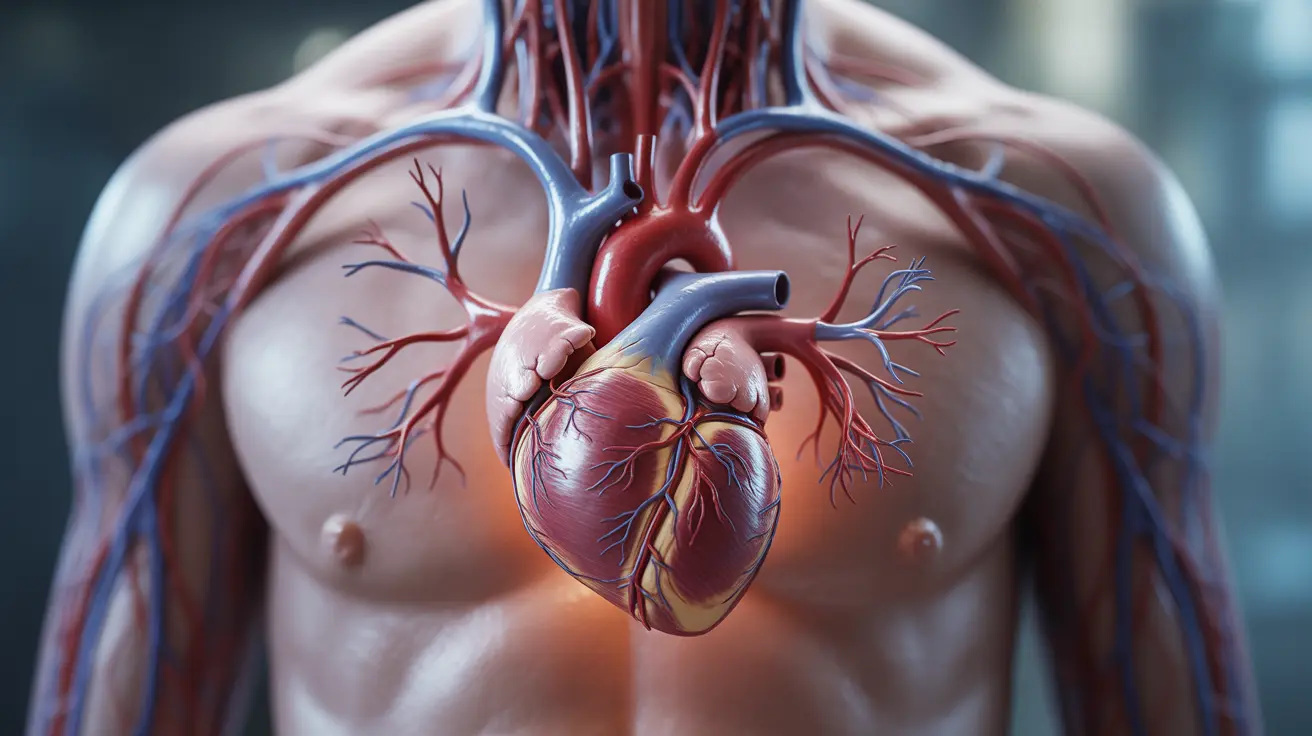
The lower legs contain a powerful but often underappreciated mechanism for moving blood back toward the heart: the calf-muscle pump. The deep veins of the calf (the posterior tibial, peroneal, and soleal veins) run through and alongside the calf muscles. When the calf muscles contract — as they do during walking, climbing stairs, or performing ankle pumps — they squeeze these veins, compressing them and pushing blood upward. One-way valves in the veins prevent the blood from falling back down when the muscles relax (S2).
This mechanism is sometimes called the "peripheral heart" or "second heart," because it performs a function analogous to cardiac pumping: it generates the pressure needed to return venous blood from the lowest point of the body back to the chest, against gravity (S2). When the calf-muscle pump is not working — because you are sitting still, lying flat without moving, or have weakened calf muscles — venous blood pools in the lower legs, leading to swelling, discomfort, and increased risk of clotting (S2)(S3).
What the evidence shows about ankle-pump exercise
Ankle-pump exercises — rhythmically pointing the toes up (dorsiflexion) and then down (plantarflexion) — are a targeted way to activate the calf-muscle pump without needing to stand or walk. This makes them practical for people who are desk-bound, in bed, post-surgical, or otherwise unable to walk at the moment.
Research measuring venous-flow velocity during ankle-pump exercise has found that both slow and fast frequencies increase the time-averaged mean velocity and peak velocity of blood flow in the common femoral vein, indicating enhanced venous return from the legs (S2). Faster frequencies (around 60 movements per minute) produced greater velocity increases than slower frequencies in the same time period (S2). Sessions of 2–3 minutes were sufficient to produce measurable haemodynamic effects (S2).
These findings support the use of ankle pumps as a practical, evidence-based intervention for improving venous return — not as a theoretical claim but as a physiologically measured effect.
How to do ankle pumps and calf raises correctly
Ankle pumps are simple and require no equipment:
Sit or lie with your legs extended. Slowly point your toes away from you (plantarflexion), holding briefly. Then pull your toes back toward your shin (dorsiflexion), holding briefly. Repeat rhythmically — a pace of roughly one full cycle per second (60 per minute) appears to produce the greatest venous-flow enhancement, though any pace is better than none (S2). Continue for 2–3 minutes, or longer if comfortable.
Calf raises are the standing equivalent:
Stand with your feet hip-width apart, near a wall or chair for balance if needed. Rise up onto the balls of your feet, lifting your heels off the ground. Hold for a second at the top, then lower slowly. Repeat 15–20 times. This activates the same calf-muscle-pump mechanism but with the added benefit of weight-bearing, which further increases the compressive force on the veins.
Both exercises can be done multiple times throughout the day — before getting out of bed, during a desk break, while watching television, or during a long flight.
What these exercises can and cannot do
Ankle pumps and calf raises are effective at improving venous return and reducing mild, gravity-related leg swelling — the kind that develops after prolonged sitting or standing and improves with movement and elevation (S2)(S5). They are useful for people at risk of venous stasis, including those recovering from surgery, those on long journeys, and those with sedentary occupations.
They are not a treatment for peripheral-artery disease. PAD is caused by atherosclerotic narrowing of the arteries, and no amount of calf-muscle-pump activity will widen a narrowed artery or restore arterial blood flow (S3). People with PAD benefit from a different kind of exercise — supervised walking programmes in which they walk to the point of claudication pain, rest, and repeat — and from medical management of their cardiovascular risk factors. If your leg symptoms are arterial in nature (pain with walking, cold feet, poor pulses), these quick exercises are not the solution; medical evaluation is (S3).
They are also not a cure for chronic venous insufficiency with established valve damage, though they can provide symptomatic relief. And they do not eliminate the risk of deep-vein thrombosis, though they may reduce it by preventing prolonged venous stasis (S2)(S4).
The honest framing is: ankle pumps and calf raises are a useful, evidence-based tool for improving venous return in the short term. They are part of good leg-health hygiene. They are not a substitute for medical care when medical care is needed.
Does leg elevation help with circulation?
How and when elevation works
Elevating the legs — typically by resting them on a pillow or cushion so the feet are above heart level — uses gravity to help drain venous blood and lymphatic fluid from the lower limbs back toward the trunk (S5). This reduces venous pressure in the legs and can alleviate swelling, heaviness, and discomfort associated with venous pooling.
Elevation is particularly useful for people with venous-related oedema, including those with heart failure, venous insufficiency, or post-surgical swelling. In these contexts, it is commonly used as an adjunct to compression therapy and medication — not as a standalone treatment (S5). Even 10–15 minutes of elevation several times a day can produce noticeable reduction in mild swelling.
For healthy people who simply have tired, swollen legs after a long day on their feet, brief elevation is a safe and effective comfort measure.
The PAD caution — when elevation can make things worse
This is a critical safety point that most "improve your circulation" articles fail to mention: leg elevation is not safe for everyone.
In people with advanced peripheral-artery disease, the arteries supplying the legs are already narrowed and may deliver blood at reduced pressure. Elevating the legs above heart level further reduces the perfusion pressure reaching the feet, which can worsen pain and, in severe cases, compromise tissue viability (S5). People with PAD-related rest pain — pain that occurs in the toes or forefoot at night or when the legs are elevated — may actually find relief by dangling the legs over the side of the bed, because gravity assists arterial flow.
The practical takeaway: if you have known PAD, or if elevating your legs causes pain in your feet or toes that eases when you lower them, do not persist with elevation. Discuss leg positioning with your vascular team or GP (S5). For everyone else, moderate elevation (feet resting on a pillow, a few inches above heart level) is safe and helpful.
What role does walking play in leg circulation?
Short walking breaks throughout the day
Walking is the most natural and broadly effective way to activate the calf-muscle pump and improve overall leg circulation. Every step involves calf-muscle contraction, which compresses the deep veins and pushes blood back toward the heart (S1)(S2). Walking also increases heart rate and cardiac output, which improves arterial blood flow to the legs.
Short walking breaks — even 5 to 10 minutes of brisk walking — throughout the day are an effective countermeasure to the venous stasis that develops during prolonged sitting (S1). For office workers, setting a reminder to stand and walk every 30–60 minutes is a practical habit that directly supports leg-circulation health.
The 150-minute weekly target
For long-term cardiovascular and circulatory health, adults should aim for at least 150 minutes per week of moderate-intensity aerobic activity — such as brisk walking, cycling, swimming, or dancing — or 75 minutes of vigorous-intensity activity, plus muscle-strengthening activities on two or more days per week (S1). This target is consistent across major national and international guidelines and is supported by extensive evidence linking regular physical activity to reduced risk of cardiovascular disease, PAD, venous disease, and related complications (S1).
The 150 minutes do not need to be done in long sessions. Accumulating activity in bouts as short as 5–10 minutes throughout the week counts toward the target (S1). For someone who is currently sedentary, even a modest increase in daily walking — starting with 10 minutes a day and building gradually — is a meaningful improvement.
What lifestyle habits support long-term leg-circulation health?
Hydration and sodium
Adequate hydration helps maintain blood volume and viscosity within normal ranges, supporting smooth circulation throughout the body. Dehydration increases blood viscosity, which can impair flow and raise the risk of clotting — particularly in the legs, where blood is already moving against gravity.
Limiting sodium intake helps control fluid balance and blood pressure. Excess sodium causes the body to retain water, which can worsen lower-limb swelling and increase the load on the cardiovascular system (S3). Standard public-health guidance recommends limiting sodium to less than 2,300 mg per day for most adults, with lower targets for people with hypertension or heart failure.
Diet and cardiovascular risk factors
A dietary pattern rich in vegetables, fruits, whole grains, lean protein, and healthy fats — including omega-3-rich fish — is associated with lower risk of atherosclerosis, PAD, and cardiovascular disease more broadly (S1). This is not because specific foods "unclog arteries" (they do not), but because a balanced diet supports healthy blood-vessel function, reduces inflammation, and helps manage the metabolic risk factors (blood pressure, cholesterol, blood sugar) that drive arterial disease.
Managing diabetes, hypertension, and dyslipidaemia — through both lifestyle changes and medication when needed — directly reduces the risk of peripheral-artery disease and its consequences, including impaired leg circulation (S3).
Smoking is the single most important modifiable risk factor for PAD. Smoking cessation is more effective for preserving and improving leg circulation than any exercise or dietary change (S3).
Clothing and footwear
Constrictive clothing — tight socks with elastic bands, overly tight jeans, or stockings that leave indentations on the skin — can impede venous return from the legs. Loose-fitting, comfortable clothing allows normal blood flow. Well-fitted shoes that support natural foot and ankle movement facilitate the calf-muscle pump during walking (S3).
Compression stockings are a different matter: these are specifically designed to provide graduated pressure that supports venous return, and they are often recommended for people with venous insufficiency, post-surgical patients, and long-haul travellers. They should be properly fitted — ideally by a healthcare professional or trained fitter — because poorly fitted compression can be counterproductive.
Breaking up prolonged sitting or standing
Both prolonged sitting and prolonged standing increase the risk of venous pooling and leg swelling (S2)(S3). For people whose jobs involve extended periods in either position, regular breaks — standing and walking every 30–60 minutes if sitting, or sitting and elevating the legs briefly if standing — are the most practical intervention.
Ankle pumps can be performed during periods when walking is not possible (during a flight, in a meeting, at a desk), providing calf-muscle-pump activation without needing to leave your seat (S2).
When should you see a doctor about leg circulation?
Emergency red flags
Certain leg symptoms require emergency medical evaluation, not self-care (S4):
Sudden, severe pain or swelling in one leg — especially if the calf or thigh is warm, red, or tender. These features can indicate deep-vein thrombosis (DVT), a blood clot in the deep veins of the leg that can be life-threatening if it breaks loose and travels to the lungs (pulmonary embolism) (S4).
Shortness of breath or chest pain accompanying leg swelling or pain — this combination suggests possible pulmonary embolism and requires immediate emergency care (S4).
A suddenly cold, pale, or blue leg — this can indicate acute limb ischaemia (a sudden blockage of arterial blood flow to the leg) and is a vascular emergency.
Do not attempt to treat these symptoms with exercises, elevation, or self-care. Call emergency services or go to the nearest emergency department.
Non-urgent but important symptoms
See a doctor — within days, not weeks — if you notice (S3)(S4):
Persistent leg pain with walking that eases with rest (intermittent claudication). Cold feet or legs, or skin that appears pale or discoloured. Wounds on the feet or legs that are slow to heal or are not healing. Swelling that does not improve with elevation and activity over several days. New or worsening varicose veins with associated pain or skin changes. A feeling of heaviness, aching, or fatigue in the legs that progressively worsens. Swelling associated with known heart, kidney, or liver disease (S4).
These symptoms do not require emergency care, but they do require clinical evaluation to determine whether the underlying cause is arterial disease, venous disease, or a systemic condition — and to initiate appropriate treatment.
Why self-treating can delay diagnosis
The exercises and lifestyle measures in this article are genuine, evidence-based tools for improving venous return and supporting general leg-circulation health. They are appropriate for people with mild, venous-related symptoms and for prevention in people at risk of venous stasis. They are not appropriate as a substitute for medical evaluation when symptoms suggest PAD, DVT, or another condition requiring diagnosis and specific treatment.
The risk of self-treating is not that the exercises are harmful (in most cases they are not). The risk is that they provide enough symptomatic relief to delay a medical visit — while the underlying condition progresses. PAD, for example, can advance from intermittent claudication to critical limb ischaemia if not managed, and DVT can cause pulmonary embolism if not diagnosed and anticoagulated. The time between "this feels a bit better after my ankle pumps" and "I should have seen a doctor sooner" is the window that costs people limbs and lives.
If your leg symptoms are new, persistent, worsening, or accompanied by any red-flag feature, see a doctor. The exercises will still be useful afterward — but they should follow a diagnosis, not replace one.
Frequently asked questions
Can you really improve leg circulation in 3 minutes?
Brief ankle-pump sessions (2–3 minutes) measurably increase venous-flow velocity in the femoral vein, improving venous return from the legs (S2). This helps with mild swelling and stiffness from sitting. However, it does not treat arterial disease, and persistent circulation problems need medical evaluation (S3)(S5).
What is the best exercise for leg circulation?
Walking is the most broadly supported exercise, with guidelines recommending at least 150 minutes per week of moderate-intensity activity (S1). For quick relief during prolonged sitting, ankle pumps and calf raises activate the calf-muscle pump and improve venous return within minutes (S2).
Should I elevate my legs if I have poor circulation?
For venous-related swelling, moderate elevation above heart level helps drain excess fluid (S5). However, if you have peripheral-artery disease, excessive elevation can reduce arterial blood flow and worsen symptoms. Discuss positioning with your clinician if you have known PAD (S5).
What are the symptoms of poor leg circulation?
Symptoms include leg pain or cramping with walking, numbness, cold feet, colour changes, swelling, and slow-healing wounds (S3). These can indicate arterial disease (reduced flow to the legs) or venous disease (impaired return from the legs), which have different causes and treatments.
When should I see a doctor about leg circulation?
See a doctor for persistent leg pain with walking, cold or discoloured skin, slow-healing sores, or swelling that doesn't improve with elevation (S3). Seek emergency care for sudden, severe, one-sided leg swelling with warmth and redness — this may indicate a blood clot (S4).
Sources
- [S1] AHA. "Recommendations for Physical Activity in Adults." 2024-01-18. https://www.heart.org/en/healthy-living/fitness/fitness-basics/aha-recs-for-physical-activity-in-adults.
- [S2] Li T, et al. "Effects of ankle pump exercise frequency on venous hemodynamics of the lower limb." Clinical Hemorheology and Microcirculation, 2020;76(1):111–120. PMID: 32538827.
- [S3] Cleveland Clinic. "Poor Circulation: Symptoms, Causes and Treatment." 2021-10-14. https://my.clevelandclinic.org/health/diseases/21882-poor-circulation.
- [S4] MedlinePlus. "Foot, leg, and ankle swelling." 2025-05-18. https://medlineplus.gov/ency/article/003104.htm.
- [S5] "Effectiveness of passive ankle pump exercise on lower limb swelling in heart-failure patients." PMC, 2025-04-13. https://pmc.ncbi.nlm.nih.gov/articles/PMC11999533/.