Written by: Tomasz Sadowski
This article is for educational purposes and reflects information from FDA labelling, peer-reviewed pharmacology references, and pharmacist-practice guidance. It is not a substitute for individualised medical or pharmaceutical advice. If you are unsure which medication is appropriate for your symptoms, or if you take other medications, consult a pharmacist or doctor before self-treating.
tl:dr
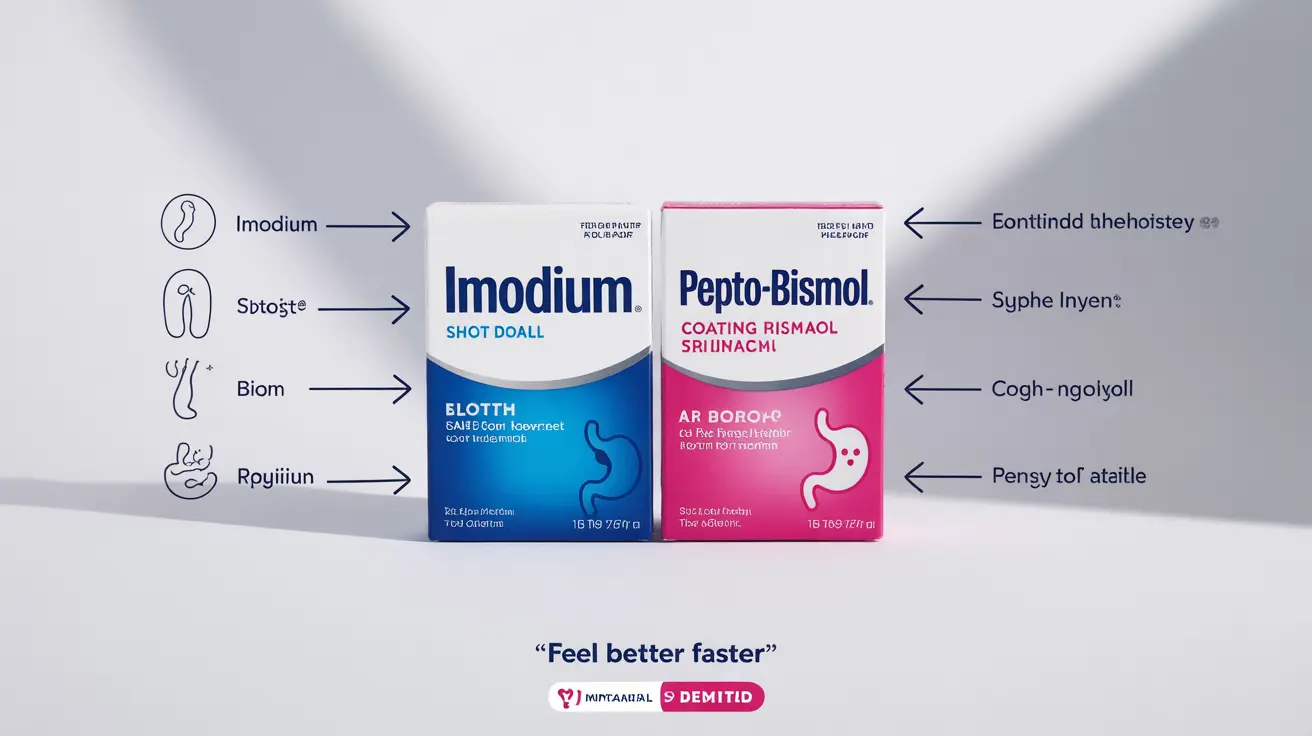
Imodium (loperamide) and Pepto-Bismol (bismuth subsalicylate) are both used for diarrhea but work differently — here is what you need to know about using them:
- They are alternative treatments, not a recommended combination; pharmacist-practice guidance advises against taking multiple OTC diarrhea medications at once without medical direction (S5).
- Imodium slows gut motility and is more effective for acute, watery diarrhea; Pepto-Bismol has broader GI-symptom coverage including nausea and indigestion (S1)(S3)(S4).
- Neither should be used if you have fever, bloody stools, or suspected inflammatory or infectious colitis (S1)(S2)(S5).
- Both have drug interactions — bismuth subsalicylate with anticoagulants and certain antibiotics, loperamide with QT-prolonging drugs — so check with a pharmacist before combining with other medications (S3)(S5).
- If diarrhea lasts more than 48 hours or is accompanied by dehydration, fever, or blood, stop self-treating and see a doctor (S5).
Table of contents
- What are Imodium and Pepto-Bismol?
- Can you take Imodium and Pepto-Bismol together?
- When should you choose Imodium over Pepto-Bismol?
- When should you choose Pepto-Bismol over Imodium?
- What are the side effects of each medication?
- What drug interactions should you know about?
- Who should not take Imodium or Pepto-Bismol?
- When should you see a doctor instead of self-treating?
- Frequently asked questions
- Sources
What are Imodium and Pepto-Bismol?
Imodium (loperamide) — how it works
Imodium is the brand name for loperamide hydrochloride, an antidiarrheal medication that works by acting on opioid-like receptors in the wall of the intestine (S1). These receptors are part of the system that controls how fast material moves through the gut. When loperamide binds to them, it produces two effects: it slows down the rhythmic contractions (peristalsis) that push food and waste through the intestines, and it reduces the secretion of fluid into the bowel lumen (S1)(S2). The net result is that stool spends more time in the colon, more water is reabsorbed, and the stool becomes firmer and less frequent.
Despite acting on opioid receptors, loperamide at recommended doses does not cross the blood-brain barrier in meaningful amounts and does not produce the pain-relieving or euphoric effects associated with opioid drugs (S1). It is classified as an antidiarrheal, not a pain medication. This distinction is important because it explains why loperamide is available over the counter while other opioid-receptor-acting drugs are not.
Loperamide is indicated for the control of acute, nonspecific diarrhea in adults and children aged 2 years and older (S1)(S2). "Nonspecific" is the key word: it means diarrhea that is not accompanied by fever, blood in the stool, or signs of a serious underlying infection. These exclusions exist because slowing intestinal motility in the setting of an invasive infection can be harmful — it can trap bacteria and toxins in the gut rather than allowing the body to expel them (S1)(S2).
The usual adult dosing regimen is an initial dose of 4 mg (two standard capsules or tablets), followed by 2 mg after each subsequent unformed stool, not exceeding 16 mg per day (S2). It is intended for short-term use — typically no more than two days for self-treatment — and should not be continued indefinitely without medical guidance.
Pepto-Bismol (bismuth subsalicylate) — how it works
Pepto-Bismol contains bismuth subsalicylate, a compound that has a different and broader mechanism of action than loperamide (S3). Bismuth subsalicylate has three clinically relevant effects: it provides a protective coating to the stomach and intestinal lining, it has mild anti-inflammatory properties (the salicylate component), and it has antimicrobial activity against certain bacteria that cause diarrhea (S3).
Because of this multi-pronged mechanism, bismuth subsalicylate is indicated not just for diarrhea but also for nausea, indigestion, heartburn, and general stomach upset (S3). It is a broader-spectrum GI-comfort medication rather than a targeted antidiarrheal.
Bismuth subsalicylate is available in liquid, chewable tablet, and caplet forms. The dosing and maximum daily limits vary by formulation, so following the product label or pharmacist guidance is important. It is generally used for mild, self-limited GI symptoms and for the prevention and treatment of traveler's diarrhea in mild cases (S3).
Why they are not the same thing
Although both are sold in the same pharmacy aisle and both say "for diarrhea" on the label, Imodium and Pepto-Bismol work by entirely different mechanisms and are suited to different clinical scenarios (S1)(S3). Loperamide is a motility-reducing agent — it physically slows the gut. Bismuth subsalicylate is a coating, anti-inflammatory, and mild antimicrobial — it calms the lining of the digestive tract. Thinking of them as interchangeable is a common consumer error, and understanding the difference is the first step to using either one appropriately.
Can you take Imodium and Pepto-Bismol together?
What the guidance actually says
This is the central question that brings most people to this page, and it deserves a direct, honest answer rather than the qualified "yes" that many health-content sites provide.
Pharmacist-practice guidance explicitly advises against taking multiple OTC diarrhea medications at once unless directed by a medical professional (S5). The reasoning is straightforward: using two agents that both reduce diarrhea can increase the risk of over-treatment — particularly constipation, abdominal pain, and electrolyte disturbances — and can mask the severity of an underlying condition that needs medical attention rather than more medication (S5).
Loperamide and bismuth subsalicylate are treated in the clinical and trial literature as alternative agents — meaning you use one or the other based on your symptoms — not as a standard combination (S4)(S5). The randomised trial comparing the two tested them head-to-head as competitors, not as partners, and found that loperamide was more effective for acute nonspecific diarrhea, while both were generally well tolerated on their own (S4).
Why combining OTC diarrhea medications is not routinely recommended
The risk of combining two antidiarrheal agents is primarily over-correction. Loperamide slows motility; bismuth subsalicylate has its own mild antidiarrheal effect. Used together, they can produce constipation that is itself uncomfortable and can — in susceptible people — lead to abdominal distension, cramping, or, in rare cases, more serious bowel complications (S4)(S5).
There is also a pharmacological concern specific to bismuth subsalicylate: it contains a salicylate, which is related to aspirin. People who are taking other salicylate-containing medications, anticoagulants, or certain other drugs may not realise they are stacking salicylate doses by adding Pepto-Bismol on top of another medication — including, potentially, alongside loperamide (S3)(S5).
The "space them 2–3 hours apart" claim — is it evidence-based?
Many consumer health websites and some pharmacy-chain information pages suggest that if you want to use both Imodium and Pepto-Bismol, you should "space them 2–3 hours apart." This advice is widely repeated but does not appear in any FDA label, clinical guideline, or pharmacist-practice recommendation in the sources reviewed for this article (S1)(S2)(S3)(S5).
The "spacing" recommendation appears to be consumer-message folklore — practical-sounding advice that has been repeated so often online that it has taken on the appearance of clinical authority. It may have originated from general advice about spacing oral medications to avoid physical interaction in the stomach, but it is not a validated clinical protocol for loperamide and bismuth subsalicylate specifically.
The more evidence-aligned approach is: choose one agent based on your symptoms, use it as directed, and if it does not provide adequate relief within its recommended timeframe, consult a pharmacist or clinician before adding a second (S5). This is not a slower or less effective strategy — it is a safer one.
A practical decision framework
Given the above, here is how to approach the decision when you are standing in the pharmacy aisle or looking at both bottles in your medicine cabinet:
Start by identifying your primary symptom. If it is frequent, watery stools without nausea or upper-GI discomfort, loperamide is the more effective first-line choice (S4). If it is looser stools alongside nausea, stomach upset, or indigestion, bismuth subsalicylate covers the broader symptom picture (S3).
Before you take anything, check whether you have any of the features that contraindicate both medications: fever, blood in the stool, severe pain, or suspected infection (S1)(S2)(S5). If any of these are present, skip the OTC aisle entirely and contact a healthcare provider.
Take the chosen medication at the recommended dose, for the recommended duration — typically up to 48 hours for self-treatment (S2)(S5). Monitor whether symptoms improve. If they do, continue the course and taper as symptoms resolve.
If symptoms have not improved after 48 hours of one medication used correctly, this is the point at which to seek medical guidance — not the point at which to add the second medication on your own (S5). The lack of response may mean the cause of the diarrhea requires a different treatment entirely (antibiotics for a bacterial infection, for example), and stacking another OTC product on top of a failing one delays appropriate care.
This approach — single agent, proper dose, defined timeframe, escalate to a clinician if no improvement — is more structured and safer than the "take both and hope for the best" strategy that many internet sources implicitly encourage.
When should you choose Imodium over Pepto-Bismol?
Acute watery diarrhea
Loperamide is the preferred OTC option when the primary symptom is frequent, watery, non-bloody diarrhea without fever (S1)(S2)(S4). Its motility-reducing mechanism directly addresses the core problem — too-fast transit and excess fluid secretion — and clinical-trial data show it reduces stool frequency and shortens the duration of acute nonspecific diarrhea more effectively than bismuth subsalicylate (S4).
If you have uncomplicated diarrhea — loose, watery stools several times a day, no blood, no fever, no severe abdominal pain — and your main goal is to reduce the number of bowel movements and firm up the stool, loperamide is the stronger and more targeted agent (S4).
That said, "stronger" does not mean "always better." If your symptoms include nausea, stomach cramping, or indigestion alongside mild diarrhea, bismuth subsalicylate may be more appropriate because it addresses the broader symptom picture (S3).
Traveler's diarrhea
For symptomatic treatment of traveler's diarrhea — the acute, watery diarrhea that can develop from consuming contaminated food or water while abroad — loperamide is the more effective symptomatic agent (S4). Clinical-trial evidence shows it provides faster relief and greater reduction in stool frequency compared with bismuth subsalicylate in this context (S4).
Bismuth subsalicylate does have a role in traveler's diarrhea, but primarily as a preventive agent in selected patients rather than as a first-choice treatment once symptoms have developed (S3)(S4). If you are already experiencing significant watery diarrhea while travelling, loperamide is the more effective option, provided you do not have fever or bloody stools.
An important caveat for traveler's diarrhea: if symptoms are severe, accompanied by fever, or if bloody stools develop, neither OTC agent is appropriate. This pattern suggests an invasive infection that may require antibiotic treatment, and you should seek medical care rather than continuing to self-treat (S1)(S2)(S5).
When should you choose Pepto-Bismol over Imodium?
Multiple GI symptoms — nausea, indigestion, heartburn
Pepto-Bismol's broader mechanism makes it more suitable when diarrhea is just one of several digestive symptoms (S3). If you have diarrhea along with nausea, general stomach upset, indigestion, or heartburn, bismuth subsalicylate addresses this wider symptom set in a way that loperamide does not. Loperamide acts only on bowel motility; it will not help with nausea or upper-GI discomfort (S1)(S3).
This makes Pepto-Bismol a reasonable first choice for the kind of generalised GI upset that accompanies a mild stomach bug, dietary indiscretion, or overindulgence — situations where the problem is not just frequent stools but also a queasy, uncomfortable stomach.
Milder diarrhea with stomach upset
If the diarrhea is mild — perhaps two or three loose stools over several hours, without the urgency or frequency that would make you want to stop motility — bismuth subsalicylate's gentler approach may be sufficient and more proportionate (S3). Loperamide is a more aggressive intervention, and using it for very mild symptoms risks overcorrecting into constipation (S2)(S4).
The decision between the two often comes down to how disruptive the diarrhea is. Urgent, frequent, watery stools that are interfering with your ability to function — loperamide is the more effective option. Mild looseness with broader stomach discomfort — bismuth subsalicylate may be all you need.
What are the side effects of each medication?
Imodium side effects
The most common side effect of loperamide is constipation — which is, in a sense, the medication doing its job too well (S1)(S2). Other commonly reported effects include abdominal pain (cramping, bloating, or discomfort), nausea, and dizziness (S1)(S2).
At recommended doses and for short-term use, these side effects are generally mild and self-limiting. The more serious concern with loperamide relates to misuse at doses far above the recommended maximum. At very high doses, loperamide can cause cardiac arrhythmias — abnormal heart rhythms that can be dangerous — particularly when combined with other medications that prolong the QT interval (S2). This is a safety issue that has led to FDA warnings about loperamide abuse, and it is the reason why some retailers have limited the quantity that can be purchased in a single transaction.
At normal recommended doses (up to 16 mg/day for adults), this cardiac risk is extremely low. But it underscores why dose limits exist and why exceeding them is dangerous.
Pepto-Bismol side effects
The most noticeable side effect of bismuth subsalicylate is cosmetic: it can cause temporary blackening of the tongue and stools (S3). This occurs because the bismuth reacts with trace amounts of sulphur in the digestive tract to form bismuth sulphide, which is black. The effect is harmless and resolves once the medication is stopped, but it can be alarming if you are not expecting it — particularly the black stool, which can be confused with a sign of gastrointestinal bleeding. If you are taking Pepto-Bismol and notice black stools, this is likely the medication, not blood. If you are unsure, contact a healthcare provider.
Other side effects include nausea and constipation (S3). Because bismuth subsalicylate contains a salicylate — a compound related to aspirin — it carries the risk of salicylate toxicity if taken in excessive amounts or by people who are already taking aspirin or other salicylate-containing medications (S3). Symptoms of salicylate toxicity include ringing in the ears (tinnitus), confusion, and rapid breathing. This is uncommon at recommended doses but is the reason why product labels specify maximum daily limits and advise caution with concurrent salicylate use.
The risk of constipation with either or both
Both medications can cause constipation — loperamide by slowing motility, and bismuth subsalicylate through its general GI-calming effects (S2)(S3)(S4). This is one of the practical reasons why using both together is not recommended: the combined constipating effect can be significant, particularly in people who are already dehydrated from the diarrhea itself (S5).
Constipation after a bout of diarrhea is not unusual even without medication — the gut can "overcorrect" as it returns to normal. Adding two constipating medications on top of this natural rebound increases the likelihood of uncomfortable, prolonged constipation and the bloating, cramping, and abdominal discomfort that accompany it.
What drug interactions should you know about?
Imodium interactions
Loperamide is metabolised in the liver, and drugs that inhibit its metabolism (particularly CYP3A4 and P-glycoprotein inhibitors) can increase loperamide blood levels, potentially raising the risk of cardiac side effects (S2). Medications that prolong the QT interval — including certain antiarrhythmics, some antibiotics, and some antipsychotics — are of particular concern when combined with loperamide, because elevated loperamide levels can independently prolong the QT interval (S2).
If you are taking prescription medications, particularly for heart rhythm, infections, or psychiatric conditions, check with a pharmacist before using loperamide. This is a quick conversation — pharmacists are trained to identify these interactions and can advise you on the spot.
Pepto-Bismol interactions
Bismuth subsalicylate's salicylate component interacts with several drug classes (S3)(S5). Anticoagulants (blood thinners such as warfarin) are the most important: salicylates can increase bleeding risk when taken alongside anticoagulant therapy. If you are on blood thinners, do not take Pepto-Bismol without medical advice (S3).
Tetracycline antibiotics (such as doxycycline) can have their absorption reduced by bismuth, making the antibiotic less effective (S3). If you are taking a tetracycline-class antibiotic, bismuth subsalicylate should generally be avoided or spaced well apart — but this is a situation where pharmacist or prescriber guidance is needed rather than self-timing.
People with diabetes who take oral hypoglycaemic agents should also be cautious, as salicylates can affect blood-sugar levels (S3).
Why a pharmacist check matters
The common thread across both medications is that drug interactions are not always obvious to the consumer. A person taking a QT-prolonging antibiotic for a respiratory infection who then develops diarrhea and reaches for Imodium may not realise they are creating a potentially dangerous combination. A person on warfarin who takes Pepto-Bismol for a stomach upset may not know they are increasing their bleeding risk.
A pharmacist can screen for these interactions in seconds. It is free, it is available without an appointment, and it is one of the most underused safety checks in self-care. Before using any OTC diarrhea medication — particularly if you take other medications regularly — ask a pharmacist (S5).
Who should not take Imodium or Pepto-Bismol?
Contraindications and cautions
Both medications should be avoided in certain clinical situations (S1)(S2)(S3)(S5):
Fever with diarrhea — this pattern suggests an infectious cause, and slowing the gut (loperamide) or coating it (bismuth subsalicylate) may delay the body's ability to clear the infection (S1)(S5). Bloody or tarry stools — this indicates a more serious process (inflammatory, infectious, or structural) that requires medical evaluation, not OTC treatment (S1)(S2)(S5). Severe abdominal pain — this may indicate a surgical or inflammatory condition that needs assessment (S5). Known or suspected inflammatory bowel disease (ulcerative colitis or Crohn's disease) — loperamide in particular can cause serious complications including toxic megacolon in acute IBD flares (S1)(S2).
Bismuth subsalicylate should additionally be avoided by people with a salicylate or aspirin allergy, people already taking aspirin or other salicylates (due to the risk of cumulative salicylate toxicity), and people with renal impairment (because salicylate clearance is reduced in kidney disease) (S3).
Children and age limits
Loperamide is approved for self-use in children aged 6 years and older (OTC formulations) and may be used from age 2 under medical supervision (prescription) (S1)(S2). Bismuth subsalicylate is generally considered safe for self-use only in patients aged 12 and older (S3). Neither product should be used in younger children without explicit medical direction — the risks of dehydration, electrolyte disturbances, and salicylate toxicity are higher in young children, and the clinical threshold for seeking medical care for diarrhea is lower.
Pregnancy and breastfeeding
Loperamide is classified as a pregnancy category B drug in older classification systems, meaning animal studies have not shown fetal harm, but well-controlled human studies are limited (S1)(S2). It is generally considered acceptable for short-term use in pregnancy when the benefit outweighs the risk, but this decision should be made with a clinician, not self-directed.
Bismuth subsalicylate is not recommended in pregnancy — the salicylate component carries risks including premature closure of the ductus arteriosus and potential bleeding complications (S3). It should also be used with caution during breastfeeding, as salicylates can pass into breast milk (S3). If you are pregnant or breastfeeding and have diarrhea, speak to your midwife or doctor before using either medication.
When should you see a doctor instead of self-treating?
Red-flag symptoms
OTC diarrhea treatment is appropriate for short-lived, mild, self-limiting episodes (S5). It is not appropriate when certain features are present that suggest a more serious cause:
Diarrhea lasting longer than 48 hours without improvement. Fever alongside diarrhea. Blood, pus, or mucus in the stool. Severe or worsening abdominal pain. Signs of dehydration: dizziness, reduced urination, dark urine, dry mouth, extreme thirst, rapid heartbeat. Persistent vomiting that prevents adequate fluid intake. Unexplained weight loss accompanying diarrhea. Diarrhea while travelling (which may indicate a pathogen requiring targeted treatment) (S5).
If any of these features are present, stop self-treating with OTC medications and seek medical evaluation. In most cases, this means a GP appointment or an urgent-care visit. If dehydration is severe or you are unable to keep any fluids down, this may require emergency assessment (S5).
Dehydration deserves specific emphasis because it is the most common complication of prolonged diarrhea and the main reason diarrhea can become medically serious in otherwise healthy adults. The signs progress from mild (thirst, slightly darker urine, dry mouth) to moderate (dizziness when standing, reduced urination, headache, fatigue) to severe (rapid heartbeat, confusion, very dark or absent urine, inability to stand without feeling faint) (S5). During any episode of diarrhea — whether you are taking OTC medication or not — active hydration is the most important self-care measure. Water, clear broths, and oral rehydration solutions are the mainstays. Avoid caffeine and high-sugar drinks, which can worsen fluid loss (S5).
If you are vomiting as well as having diarrhea, maintaining adequate oral hydration becomes much harder. Small, frequent sips may work when larger volumes are not tolerated. If even sips are coming back up, this is an urgent-care situation — intravenous fluids may be needed, and a clinician should assess the underlying cause (S5).
When OTC treatment has not worked
If you have been using either loperamide or bismuth subsalicylate as directed for 48 hours and your symptoms have not improved — or have worsened — this is itself a reason to seek medical advice (S5). Persistent diarrhea that does not respond to standard OTC treatment may indicate an infection that requires antibiotics, a parasitic infection requiring targeted therapy, a medication side effect, or an underlying gastrointestinal condition that needs diagnosis. Continuing to add more OTC medications in this situation delays appropriate evaluation and treatment.
Frequently asked questions
Can you take Imodium and Pepto-Bismol at the same time?
Routine combination is not recommended. Pharmacist-practice guidance advises against taking multiple OTC diarrhea medications simultaneously without direction from a healthcare professional, because this can increase side effects and mask the underlying cause (S5). If one medication is not providing relief, consult a pharmacist or doctor before adding a second.
Which is better for diarrhea — Imodium or Pepto-Bismol?
For acute, watery, non-bloody diarrhea, clinical-trial evidence shows loperamide (Imodium) is more effective at reducing stool frequency and shortening episodes (S4). Bismuth subsalicylate (Pepto-Bismol) is better suited for milder diarrhea accompanied by nausea, indigestion, or heartburn (S3).
What are the side effects of taking Imodium?
Common side effects include constipation, abdominal pain, and dizziness (S1)(S2). At high or chronic doses — especially when combined with drugs that affect heart rhythm — loperamide can cause serious cardiac arrhythmias (S2). Do not exceed the recommended dose.
Why does Pepto-Bismol turn your tongue and stool black?
Bismuth subsalicylate reacts with trace amounts of sulphur in the digestive tract to form bismuth sulphide, which is black. This is a harmless, temporary cosmetic effect, not a sign of bleeding (S3). The discolouration resolves after stopping the medication.
When should I stop self-treating diarrhea and see a doctor?
Stop self-treating and seek medical evaluation if diarrhea lasts longer than 48 hours, is accompanied by fever, severe abdominal pain, blood in the stool, signs of dehydration, or persistent vomiting (S5). Do not use OTC anti-diarrheal medications in these situations.
Sources
- [S1] FDA. Imodium (loperamide hydrochloride) — Prescribing Information. 2016. https://www.accessdata.fda.gov/drugsatfda_docs/label/2016/017694s052lbl.pdf.
- [S2] Mayo Clinic. Loperamide (oral route). 2026-02-28. https://www.mayoclinic.org/drugs-supplements/loperamide-oral-route/description/drg-20064573.
- [S3] StatPearls / NCBI Bookshelf. Bismuth Subsalicylate. NBK560697. 2024-04-20. https://www.ncbi.nlm.nih.gov/books/NBK560697/. Also: Mayo Clinic. Bismuth subsalicylate (oral route). 2026-01-31. https://www.mayoclinic.org/drugs-supplements/bismuth-subsalicylate-oral-route/description/drg-20068521.
- [S4] "Comparative efficacy of loperamide hydrochloride and bismuth subsalicylate in the management of acute nonspecific diarrhea." Clinical Therapeutics, 1990. PMID: 2192553.
- [S5] SafeMedication (ASHP). "The Dos and Don'ts of Treating Diarrhea." 2021-09-02. https://www.safemedication.com/pharmacist-insights/2021/09/03/the-dos-and-donts-of-treating-diarrhea.