Written by: Tomasz Sadowski
This article is for informational purposes only and does not constitute medical advice. If you have questions about a pregnancy test result, speak with a qualified healthcare provider.
TL;DR
Home pregnancy tests detect human chorionic gonadotropin (hCG) in urine — no other liquid is a valid specimen [S1]. Only urine from the person being tested, collected and used exactly as the instructions specify, can produce a meaningful result [S1]. First-morning urine often improves accuracy because hCG is more concentrated before the day's first drink [S1, S2]. Testing too early — before hCG has risen to a detectable level, roughly 12–15 days after ovulation — is the most common reason for a false-negative result [S1]. A positive home test usually indicates pregnancy, but any result should be confirmed with a healthcare provider [S1].
Table of Contents
- What is a home pregnancy test and how does it work?
- What liquid should you use in a pregnancy test?
- When is the best time to take a pregnancy test?
- What causes a false-negative pregnancy test result?
- What causes a false-positive pregnancy test result?
- What happens if you use a liquid other than urine?
- How do you take a home pregnancy test correctly?
- When should you see a doctor after a home pregnancy test?
- Frequently asked questions
- Sources
What is a home pregnancy test and how does it work?
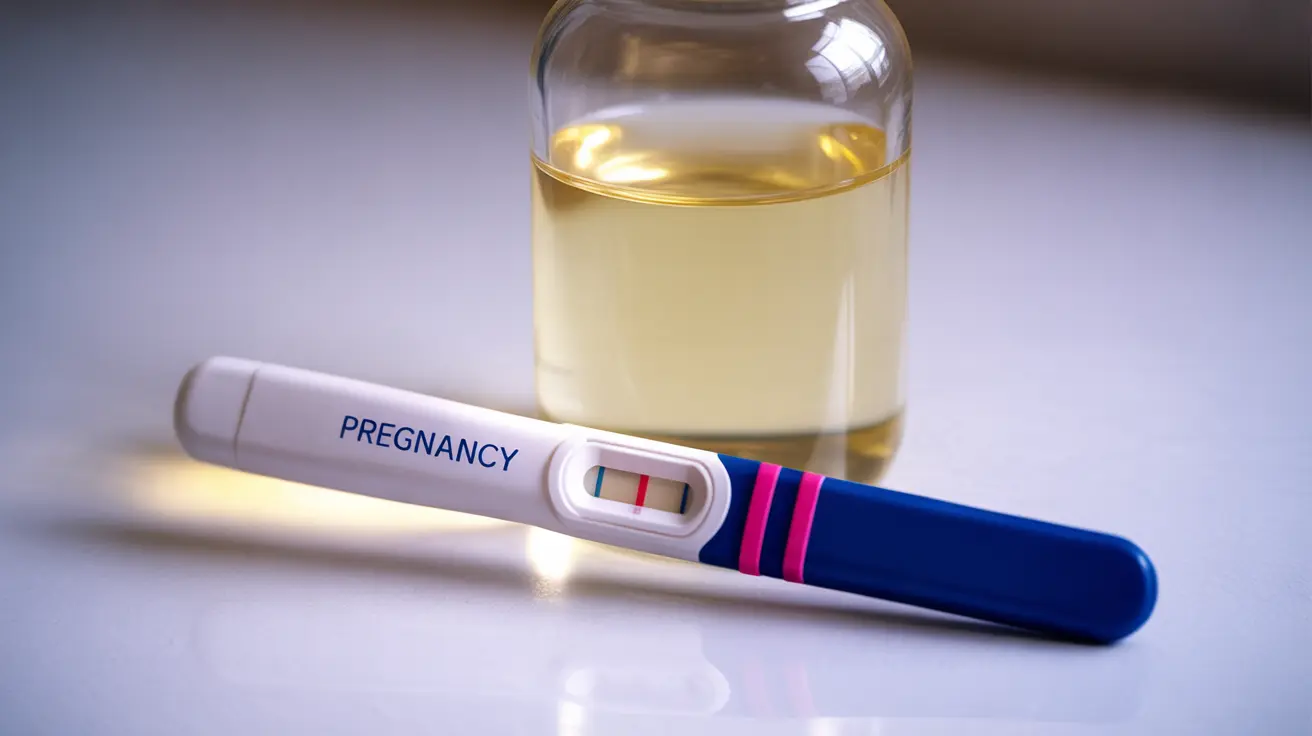
A home pregnancy test is a qualitative urine assay — it detects whether a specific hormone is present, not the exact amount [S1]. The U.S. Food and Drug Administration classifies these tests as screening tools, not definitive medical diagnostics [S1].
What hormone does a pregnancy test detect?
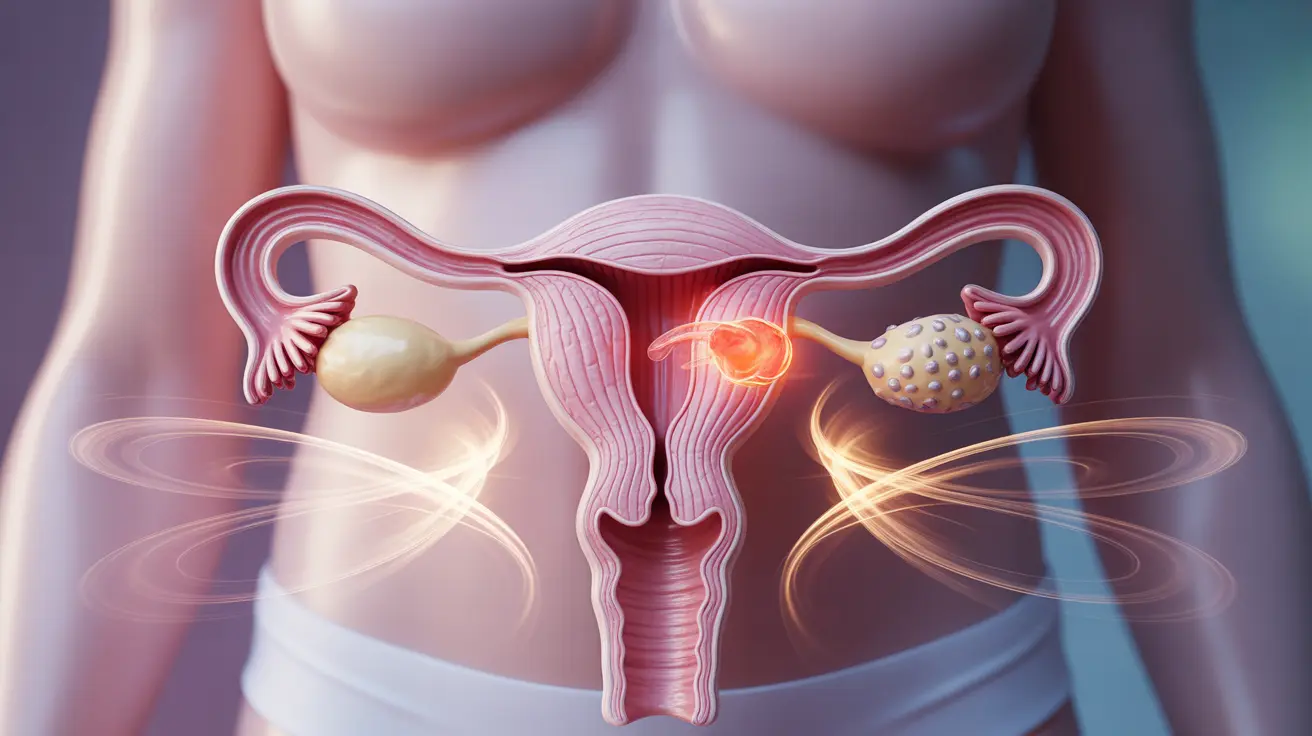
Home pregnancy tests detect human chorionic gonadotropin, commonly abbreviated hCG [S1]. hCG is produced by trophoblast cells that form after a fertilised egg implants in the uterine wall; that tissue later develops into the placenta [S2]. Because hCG is produced specifically in response to implantation, its presence in urine is a marker for pregnancy [S1, S2].
Urine pregnancy assays typically detect hCG at a threshold of approximately 20 mIU/mL, though sensitivity varies between products [S2].
How does the test strip produce a visible result?
The strip uses antibody-based lateral-flow technology: antibodies engineered to bind hCG are embedded in the strip [S2]. When urine containing hCG flows across the strip, those antibodies bind to the hormone and trigger a visible colour change — a line, plus sign, or digital readout — depending on the test design [S2].
What liquid should you use in a pregnancy test?
The only valid liquid for a home pregnancy test is urine from the person being tested [S1]. That is not a commercial or brand preference; it reflects the biology the test is designed around. The assay's antibodies are calibrated to detect hCG in a human urine matrix, not in any other substance [S1, S2].
Why is urine the only valid specimen?
hCG is excreted by the kidneys and passes into urine in concentrations that a home test can detect [S1, S2]. No other readily available liquid contains hCG from an ongoing pregnancy, so no other liquid can validate or refute pregnancy status [S1]. Substances other than urine — regardless of their chemistry — either lack hCG entirely or may contain compounds that interfere with the strip's antibody reaction, producing uninterpretable results [S2].
Does it matter which type of urine sample you collect?
Yes. The FDA advises that first-morning urine can improve test accuracy [S1]. The reason is physiological: hCG concentrations in urine fall when urine is diluted by high fluid intake during the day [S2]. First-morning urine, which accumulates overnight without additional fluid intake, typically carries a higher hCG concentration — making it easier for the test to detect hCG at very early stages of pregnancy [S1, S2].
The FDA also recommends using fresh urine rather than a sample that has been stored, and following the test's own instructions for collection (midstream catch or urine cup) [S1].
When is the best time to take a pregnancy test?
Timing matters as much as liquid choice. A test taken too early will produce a false negative not because it failed, but because hCG has not yet risen to a detectable level [S1].
How early after ovulation can hCG be detected?
In a standard 28-day menstrual cycle, hCG may become detectable in urine approximately 12–15 days after ovulation [S1]. The FDA states that testing one to two weeks after a missed period is the most reliable approach for most people [S1].
Why does testing too early produce a false negative?
hCG levels at implantation are very low and rise exponentially in early pregnancy [S2]. If a test is taken before hCG reaches the detection threshold (approximately 20 mIU/mL in many urine assays [S2]), the result will be negative even in an established pregnancy. Clinical guidance also notes that very early pregnancy may produce a negative urine hCG result, and that a negative test cannot reliably exclude an ectopic pregnancy in a person with symptoms [S4].
What causes a false-negative pregnancy test result?
A false negative is a negative result when pregnancy is actually present. Three factors account for most false negatives [S1, S2, S4]:
Testing too early. This is the most common cause. If hCG has not yet reached the test's detection threshold, the result will be negative [S1]. Waiting until one to two weeks after a missed period substantially reduces this risk [S1].
Dilute urine. High fluid intake before testing lowers the concentration of hCG in urine [S2]. The StatPearls clinical reference explicitly cites dilute urine as a cause of falsely negative urine hCG results [S2]. Using first-morning urine mitigates this [S1, S2].
Incorrect use of the test. Reading results outside the specified time window, using an expired test, or storing the test at incorrect temperatures can all produce unreliable results [S1].
What causes a false-positive pregnancy test result?
A false positive is a positive result in a person who is not pregnant. False positives are less common than false negatives but do occur [S1, S2].
Blood or protein in urine. The presence of blood or protein in a urine sample can interfere with the antibody-based reaction and produce a positive result in the absence of pregnancy [S2]. This is a documented interfering factor in clinical urine hCG testing [S2].
Exogenous hCG and certain medications. Some fertility treatments involve injected hCG, and certain medical conditions can raise hCG levels outside of pregnancy [S2].
Interpretation error. Misreading the test — for example, treating an evaporation line as a positive line — can lead to a false positive [S1]. Following the timing instructions in the package insert reduces this risk [S1].
What happens if you use a liquid other than urine?
Using a liquid other than urine on a home pregnancy test does not produce a valid result. Because the test is calibrated to detect hCG in a human urine matrix, any other liquid either lacks hCG entirely or contains compounds that may chemically interfere with the antibody strip [S1, S2]. Either outcome produces a result — positive, negative, or ambiguous — that carries no diagnostic meaning for pregnancy status [S1].
Common household liquids such as water, soft drinks, vinegar, bleach, and soap are not valid pregnancy-test specimens [S1]. The FDA is explicit that only urine from the person being tested, used exactly per the test instructions, is the appropriate specimen [S1]. Any result obtained from a non-urine liquid should be disregarded entirely.
How do you take a home pregnancy test correctly?
Following the test's instructions precisely is as important as using the right liquid. The FDA advises several general principles that apply across most home test designs [S1]:
Use urine from the person being tested. Collect a midstream urine sample or collect urine in a clean cup as the test instructions specify [S1]. Use the sample fresh [S1].
Use first-morning urine when possible, especially in early pregnancy, to maximise hCG concentration [S1].
Check the expiration date before use. An expired test may not function reliably [S1].
Read the result within the time window stated in the instructions [S1]. Reading too early or too late can produce misleading lines.
When should you see a doctor after a home pregnancy test?
A home pregnancy test is a qualitative screening tool, not a definitive medical diagnostic [S1]. Any positive result should be confirmed by a healthcare provider, who can use quantitative blood hCG testing and clinical assessment to confirm pregnancy and rule out complications [S1, S4].
A negative result does not reliably exclude pregnancy if the test was taken very early [S1]. A negative urine test also cannot reliably rule out ectopic pregnancy in a person with relevant symptoms such as pelvic pain or spotting; clinical evaluation is required in that context [S4].
Frequently Asked Questions
Can you use water instead of urine on a pregnancy test?
No. Water contains no hCG, so the test strip cannot detect pregnancy. Only urine from the person being tested is a valid specimen. Using water produces a meaningless result and cannot confirm or rule out pregnancy [S1].
Does the type of urine sample matter for a pregnancy test?
Yes. First-morning urine typically contains a higher concentration of hCG than urine collected later in the day, making it more likely to detect early pregnancy accurately. This is especially important in the days immediately after a missed period [S1, S2].
How soon after conception will a pregnancy test be positive?
hCG may be detectable in urine around 12–15 days after ovulation in a standard 28-day cycle. Testing one to two weeks after a missed period is more reliable; testing earlier increases the risk of a false negative [S1].
What can cause a false-positive pregnancy test?
False positives can result from blood or protein in the urine, certain medications that supply exogenous hCG, some medical conditions, or misreading the test result. Any positive home test should be confirmed by a healthcare provider [S1, S2].
Can a negative pregnancy test be wrong?
Yes. A negative result can be a false negative if the test is taken very early, if urine is diluted, or if the instructions are not followed correctly. Repeating the test a few days later, or consulting a doctor if symptoms continue, is advisable [S1, S2, S4].
10. Sources
[S1] U.S. Food and Drug Administration. Pregnancy. FDA Medical Devices, 2019. https://www.fda.gov/medical-devices/home-use-tests/pregnancy
[S2] Betz D, Fane K. Human Chorionic Gonadotropin. In: StatPearls. StatPearls Publishing; updated April 27, 2025. https://www.ncbi.nlm.nih.gov/books/NBK532950/
[S3] Centers for Disease Control and Prevention. Urine Pregnancy Laboratory Methods. NHANES 2021. https://wwwn.cdc.gov/nchs/data/nhanes/public/2021/labmethods/UCPREG-L-MET-508.pdf
[S4] National Institute for Health and Care Excellence (NICE). Ectopic pregnancy and miscarriage: diagnosis and initial management. NICE Guideline NG126, 2019. https://www.nice.org.uk/guidance/ng126
[S5] van der Laan L et al. Self-testing for pregnancy: a systematic review and meta-analysis. BMJ Open. 2022;12(2):e054120. https://bmjopen.bmj.com/content/12/2/e054120