Written by: Tomasz Sadowski
This article compares two commercial products using brand-published nutrition data and peer-reviewed health evidence. It is not sponsored by or affiliated with either Red Bull or Monster. It is for educational purposes only and is not a substitute for individualised medical or nutritional advice. If you have questions about caffeine intake — particularly if you have heart conditions, hypertension, are pregnant, or are under 18 — consult your GP, cardiologist, or registered dietitian.
tl:dr
Red Bull and Monster are the two most popular energy drinks, but they differ in serving size, total caffeine, and sugar — and neither is "healthy":
- A standard Red Bull (250 ml / 8.4 fl oz) contains 80 mg caffeine, 27 g sugar, and 110 kcal; a standard Monster (500 ml / 16 fl oz) contains 160 mg caffeine, ~54 g sugar, and 210 kcal (S1)(S2).
- Per-ounce caffeine concentration is roughly similar — the bigger Monster can simply delivers about twice the total dose (S1)(S2).
- Monster's "energy blend" adds L-carnitine, inositol, and ginseng, but there is limited evidence these compounds meaningfully enhance energy or focus beyond caffeine and sugar (S2)(S5).
- EFSA safety guidance sets healthy-adult caffeine limits at 200 mg per single dose and 400 mg per day; one Monster can approaches half the daily limit in a single serving (S3).
- High-intake patterns are linked to tachycardia, arrhythmias, hypertension, and — in rare cases — cardiac arrest; young adults, adolescents, pregnant people, and those with heart conditions should limit or avoid energy drinks (S5).
Table of contents
- How do Red Bull and Monster compare on caffeine, sugar, and calories?
- What extra ingredients does Monster have that Red Bull doesn't?
- How much caffeine is safe per day?
- What are the health risks of energy drinks?
- Who should limit or avoid energy drinks?
- Is either Red Bull or Monster "healthier"?
- Frequently asked questions
- Sources
How do Red Bull and Monster compare on caffeine, sugar, and calories?
The numbers side by side
The most important difference between Red Bull and Monster is not a secret ingredient or a proprietary formula. It is the can size.
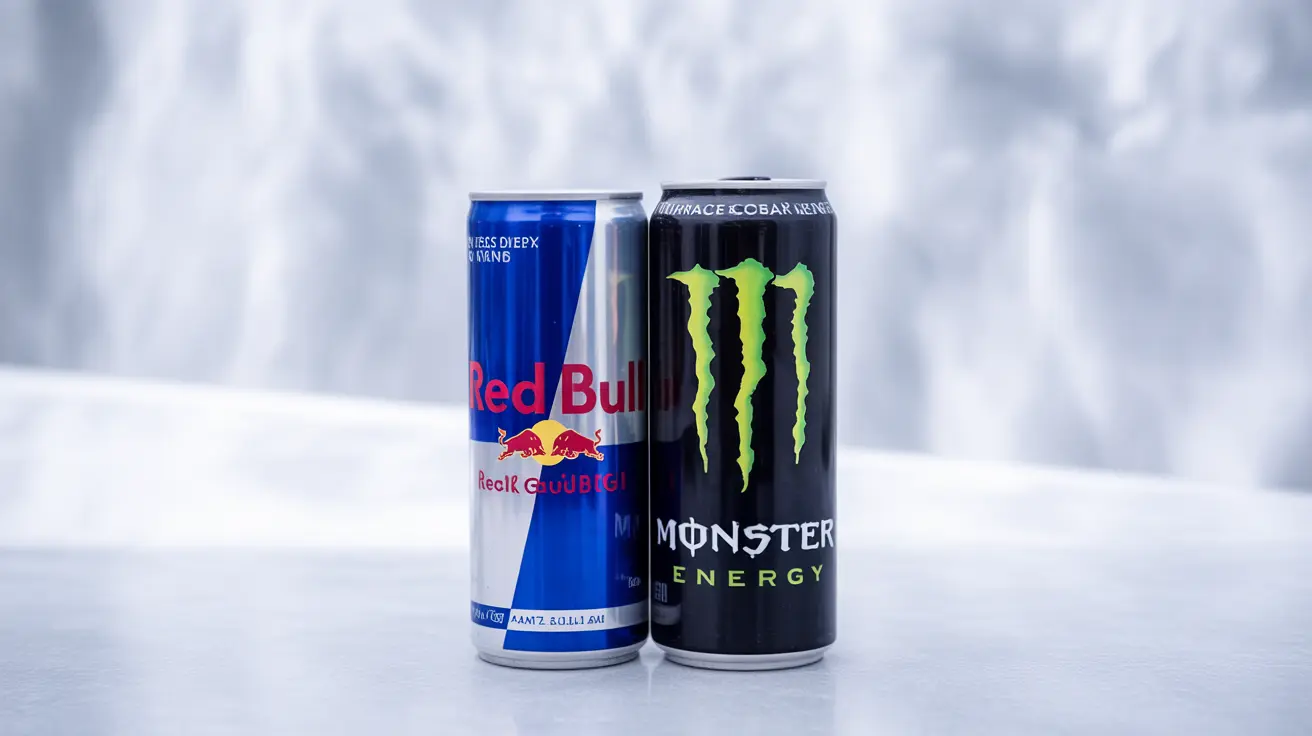
A standard Red Bull can is 250 ml (8.4 fl oz). It contains 80 mg of caffeine, 27 g of sugar, and approximately 110 kcal (S1). A standard Monster Energy Original can is 500 ml (approximately 16 fl oz). It contains 160 mg of caffeine, approximately 54 g of sugar, and about 210 kcal (S2).
Doubling the volume roughly doubles everything — caffeine, sugar, and calories. This is the core fact that many comparison articles obscure by discussing per-ounce concentrations without making the total-dose implication explicit.
Why serving size is the real difference
On a per-100-millilitre basis, the caffeine concentration of both drinks is similar — approximately 32 mg per 100 ml for Red Bull and approximately 32 mg per 100 ml for Monster (S1)(S2). Neither is substantially "stronger" than the other in terms of concentration. The meaningful difference is that people who drink a single Monster can consume twice the caffeine, twice the sugar, and twice the calories of someone who drinks a single Red Bull — simply because the Monster can is twice the size.
This matters because caffeine safety thresholds are based on absolute dose (milligrams), not concentration (S3). Your body does not care whether the 160 mg of caffeine came from a concentrated shot or a 500 ml can — the physiological effect is the same. A single standard Monster can delivers as much caffeine as two standard Red Bulls, and this has direct implications for daily-limit calculations.
Sugar-free variants
Both brands offer sugar-free versions. Red Bull Sugarfree and Red Bull Zero contain 0 g of sugar and the same 80 mg of caffeine as the standard can, with significantly fewer calories (S1). Monster Ultra (500 ml) contains 0 g of sugar and the same 160 mg of caffeine as the standard Monster can (S2).
Sugar-free variants address the sugar-and-calorie concern but do not change the caffeine content — and it is the caffeine (along with other stimulant ingredients) that drives most of the cardiovascular and neurological effects discussed later in this article (S5). Choosing sugar-free is better for calorie and metabolic reasons, but it does not make the drink "safe" in an unqualified sense.
What extra ingredients does Monster have that Red Bull doesn't?
The "energy blend" — what's in it
Both Red Bull and Monster contain caffeine, taurine, and B-group vitamins (B3, B5, B6, B12) — these are standard energy-drink ingredients shared across brands (S1)(S2). Monster's formula additionally includes what it calls an "energy blend" containing L-carnitine, inositol, guarana extract, and Panax ginseng extract (S2).
These ingredients are marketed as providing additional energy, focus, or performance benefits beyond caffeine alone. The question is whether they actually deliver.
Do these ingredients actually do anything?
The short answer, based on the current evidence, is: not meaningfully, at the doses present in energy drinks.
L-carnitine plays a role in fatty-acid metabolism, but supplementation in healthy, well-nourished adults with adequate dietary carnitine does not reliably enhance energy production or exercise performance (S5). Panax ginseng has a long history in traditional medicine, but clinical evidence for its acute energy-boosting or cognitive-enhancing effects at the doses found in energy drinks is weak and inconsistent (S5). Inositol is a vitamin-like compound involved in cell signalling, but there is no strong evidence that supplemental doses in an energy drink produce noticeable effects on alertness or performance (S5).
Guarana extract does contain caffeine — so it contributes to the total stimulant load — but it is not an additional "energy ingredient" beyond caffeine itself. Its inclusion may mean the total caffeine equivalent of a Monster can is slightly higher than the 160 mg listed from synthetic caffeine alone, though most labelling accounts for total caffeine from all sources.
The practical takeaway is that Monster's "energy blend" is primarily a marketing differentiation. The functional effects of both Red Bull and Monster are overwhelmingly driven by their caffeine and sugar content, not by the supplementary ingredients (S5). You are not getting a meaningfully different physiological experience from Monster's extras — you are getting a bigger can with more caffeine and more sugar.
How much caffeine is safe per day?
The EFSA thresholds
The most comprehensive safety assessment for caffeine intake comes from EFSA, which evaluated the totality of available evidence and concluded that for healthy adults, single caffeine doses up to 200 mg and total daily intake up to 400 mg are unlikely to raise safety concerns (S3)(S4). Above these thresholds, the risk of side effects — including jitteriness, insomnia, palpitations, and elevated blood pressure — increases (S3)(S4).
For pregnant and breastfeeding women, the safe limit is lower: regular daily caffeine intake up to 200 mg is considered unlikely to affect the fetus or infant (S3)(S4). No specific safe threshold is established for children and adolescents by EFSA in the same document, but the general position of public-health bodies is that high-caffeine energy drinks are not appropriate for these age groups (S5).
How Red Bull and Monster fit within those limits
One standard Red Bull (80 mg) represents 40% of the single-dose limit and 20% of the daily limit for a healthy adult (S1)(S3). This leaves substantial room within the safety thresholds for other caffeine sources during the day — coffee, tea, chocolate, soft drinks.
One standard Monster (160 mg) represents 80% of the single-dose limit and 40% of the daily limit (S2)(S3). A second Monster in the same day would bring total caffeine to 320 mg — well within the daily limit but approaching it, particularly if the person also drinks coffee or tea.
For pregnant women, a single Monster can (160 mg) reaches 80% of the 200 mg daily limit in one serving, leaving almost no room for any other caffeine source that day (S2)(S3).
Why energy-drink caffeine may behave differently from coffee
A recent comprehensive review argues that applying pure-caffeine safety thresholds directly to energy drinks may underestimate risk, because energy drinks contain additional stimulants (taurine, guarana), high sugar loads, and are often consumed rapidly, in large volumes, or in combination with alcohol or intense exercise (S5). These contextual factors can amplify the cardiovascular and neurological effects beyond what the same dose of caffeine from coffee would produce (S5).
This is not a universally settled position — the EFSA assessment is based on caffeine as a molecule and does not differentiate by delivery vehicle (S3). But the clinical case literature includes cardiac events in young adults consuming multiple energy drinks under conditions (alcohol co-ingestion, sleep deprivation, intense exercise) that are less typical of coffee drinkers (S5). For YMYL purposes, the conservative framing is: energy-drink caffeine counts toward the same daily limits as any other caffeine source, but the consumption context may increase real-world risk beyond what the milligram number alone suggests.
What are the health risks of energy drinks?
Cardiovascular effects
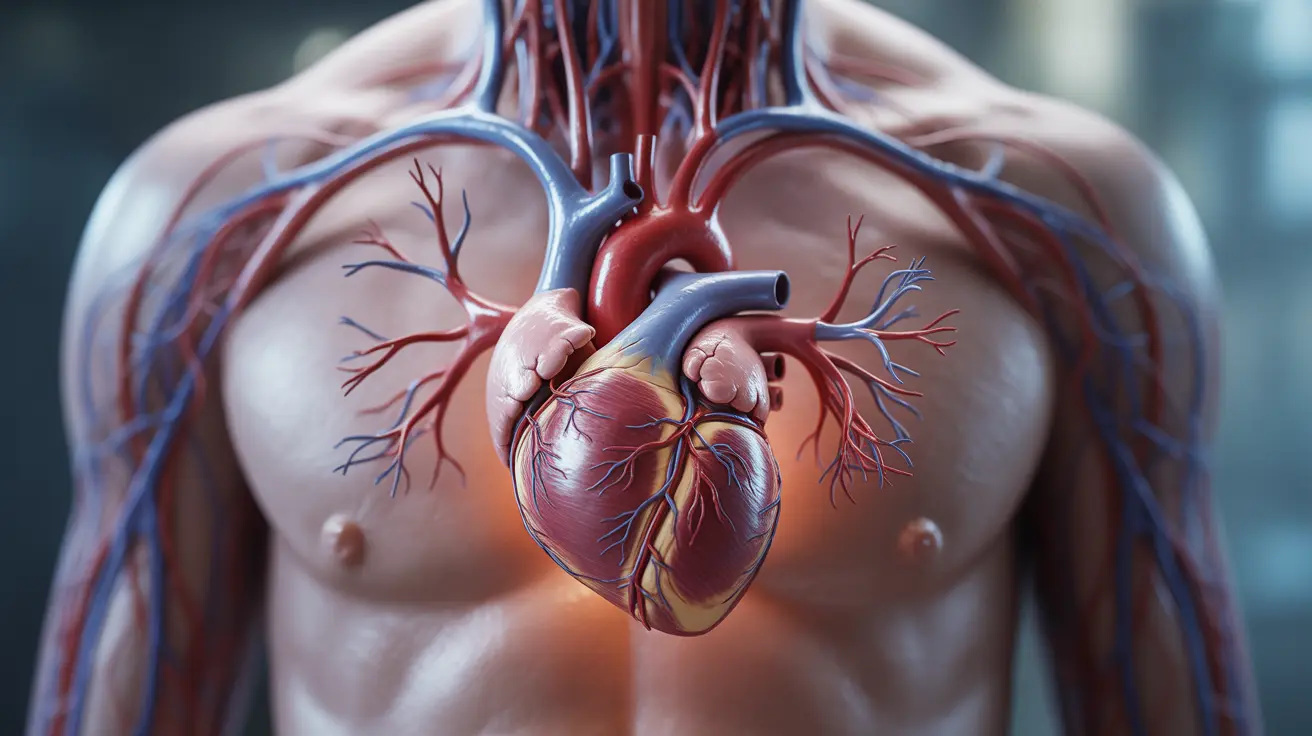
The most serious documented risk of high energy-drink consumption is cardiovascular. A comprehensive review of energy-drink-related adverse events identified tachycardia (rapid heart rate), elevated blood pressure, arrhythmias (abnormal heart rhythms), and — in nine documented cases — cardiac arrest, three of which were fatal (S5).
These severe events are rare and are associated with high-volume consumption (multiple cans in a short period), combination with alcohol or intense exercise, or consumption by individuals with pre-existing cardiovascular conditions (S5). A single can of Red Bull or Monster in an otherwise healthy adult is unlikely to produce a cardiac emergency. But the risk is not zero, and it scales with dose, speed of consumption, and individual vulnerability.
Energy drinks may raise blood pressure and alter the electrical activity of the heart, particularly with rapid ingestion (S5). These effects are transient in most people but can be clinically significant in those with underlying hypertension or conduction abnormalities.
Sugar, calories, and metabolic risk
A single standard Monster can contains approximately 54 g of sugar — more than the entire daily limit of added sugars recommended by many health guidelines (typically 25–36 g per day) (S2). A standard Red Bull contains 27 g — still a substantial sugar load in a single beverage (S1).
Regular consumption of high-sugar drinks contributes to calorie surplus, weight gain, insulin resistance, and increased risk of type 2 diabetes and cardiovascular disease over time (S5). Sugar-free variants eliminate this specific concern but do not address the other health effects.
Sleep disruption
Caffeine is a stimulant with a half-life of approximately 5–6 hours in most adults. A Monster consumed at 4 pm still has roughly 80 mg of active caffeine in the system at 10 pm. Regular use of energy drinks — particularly in the afternoon or evening — disrupts sleep quality and duration, which in turn affects mood, cognitive function, metabolic health, and cardiovascular risk (S5).
The paradox of energy drinks is that they are often used to compensate for inadequate sleep, but they also perpetuate the sleep deficit that created the need for them. Breaking this cycle is one of the most effective lifestyle changes a regular energy-drink consumer can make.
The compounding effect of multiple cans, alcohol, or exercise
The risk profile of energy drinks changes substantially with context (S5). Consuming two or three cans in a single session — common at social events, gaming sessions, or long study nights — can deliver 320–480 mg of caffeine in a short period, approaching or exceeding the daily safety limit in a single sitting (S3)(S5).
Combining energy drinks with alcohol is a well-documented risk pattern. Alcohol is a depressant; caffeine is a stimulant. The combination can mask the subjective signs of intoxication (people feel less drunk than they are), leading to higher alcohol consumption, greater risk-taking, and increased likelihood of acute toxicity from both substances (S5).
Combining energy drinks with intense exercise increases cardiac workload at a time when the heart is already working hard. This combination has been implicated in several of the cardiac-arrest cases documented in the review literature (S5).
Who should limit or avoid energy drinks?
Adolescents and children
Health guidance from multiple public-health bodies recommends limiting or avoiding high-caffeine energy drinks for adolescents and children (S5). Young people have lower body mass, less mature metabolic capacity, and developing cardiovascular and neurological systems, all of which increase susceptibility to caffeine's effects.
Neither Red Bull nor Monster is marketed as a children's product, but both are widely consumed by teenagers. The absence of a regulatory age restriction on purchase in many countries does not mean they are safe for all ages — it means regulation has not caught up with the evidence.
Pregnant and breastfeeding people
Caffeine crosses the placenta and enters breast milk. The safe daily limit for pregnant and breastfeeding women is 200 mg — half the adult limit (S3)(S4). A single Monster can (160 mg) nearly reaches this threshold on its own, leaving almost no margin for any other caffeine source. Regular energy-drink use during pregnancy is not recommended (S3)(S4).
People with heart conditions or hypertension
People with known heart disease, hypertension, arrhythmia, or a family history of sudden cardiac death should limit or avoid high-caffeine energy drinks (S5). The cardiovascular effects — blood-pressure elevation, heart-rate increase, and potential for arrhythmia — are amplified in individuals with pre-existing vulnerability. This is not theoretical: the documented cardiac-arrest cases in the review literature disproportionately involved individuals with underlying conditions or extreme consumption patterns (S5).
Is either Red Bull or Monster "healthier"?
No — and framing the question this way misses the point.
Both drinks are high-caffeine, high-sugar beverages designed to provide a temporary stimulant effect. Red Bull delivers a smaller dose because it comes in a smaller can. Monster delivers a larger dose because it comes in a larger can. Per unit volume, they are remarkably similar in caffeine concentration and ingredient profile.
Choosing between them on health grounds is like choosing between a small and large serving of the same thing. The "healthier" choice is not the smaller can — it is the broader context of consumption: how often you drink them, what else you consume that day, whether you have risk factors, and whether you are using them to compensate for inadequate sleep, hydration, or nutrition.
If you want caffeine with fewer health concerns, coffee (black, without added sugar) delivers a comparable stimulant effect with fewer additional ingredients and no sugar load. If you want hydration, water is more effective. If you want an energy drink occasionally — one standard can, not multiple, not combined with alcohol, not consumed late in the day — the health risk for a healthy adult without cardiovascular conditions is low but not absent (S3)(S5).
Neither brand deserves the label "healthy." The relevant question is not "which is better?" but "how much, how often, and for whom?"
Frequently asked questions
Which has more caffeine — Red Bull or Monster?
Per can, Monster has more: 160 mg in 500 ml versus Red Bull's 80 mg in 250 ml (S1)(S2). Per ounce, the concentration is similar. The difference is the can size — Monster delivers about twice the total caffeine (S1)(S2).
How many energy drinks can you safely have per day?
EFSA sets 400 mg/day as the caffeine limit for healthy adults (S3). That equals about five standard Red Bulls or two-and-a-half Monsters. But energy drinks contain additional stimulants and sugar that may warrant more conservative limits (S3)(S5).
Are sugar-free energy drinks healthier?
They eliminate sugar and reduce calories but retain the same caffeine (S1)(S2). This is better metabolically but does not eliminate caffeine-related cardiovascular or sleep risks (S5).
Do Monster's extra ingredients actually work?
Limited strong evidence exists that L-carnitine, inositol, or ginseng at energy-drink doses meaningfully enhance energy beyond caffeine and sugar (S2)(S5). The functional effects of both drinks are overwhelmingly driven by caffeine and sugar.
Are energy drinks dangerous for teenagers?
Multiple health bodies recommend limiting or avoiding high-caffeine energy drinks for adolescents due to heightened cardiovascular, neurological, and addictive risks (S5). Neither Red Bull nor Monster is formulated for children.
Sources
- [S1] Red Bull GmbH. "Red Bull Energy Drink: Ingredients." https://www.redbull.com/int-en/energydrink/products/red-bull-energy-drink-ingredients-list.
- [S2] Monster Beverage Corporation. "Monster Energy Original." https://www.monsterenergy.com/.
- [S3] EFSA NDA Panel. "Scientific Opinion on the safety of caffeine." 2015. https://www.efsa.europa.eu/sites/default/files/corporate_publications/files/efsaexplainscaffeine150527.pdf.
- [S4] EUFIC. "EFSA opinion on the safety of caffeine." 2015-06-22. https://www.eufic.org/en/whats-in-food/article/efsa-opinion-on-the-safety-of-caffeine.
- [S5] Costantino A, et al. "The Dark Side of Energy Drinks: A Comprehensive Review of Their Impact on the Human Body." Nutrients, 2023;15(18):3922. PMID: 37764707.